Get Full Government Meeting Transcripts, Videos, & Alerts Forever!
Get email alerts on the Legislative Roundup topic
No spam. Unsubscribe anytime.
House passes slate of consent and concurrence items; dozens of bills advance
Summary
On Feb. 28, 2011, the Utah House approved numerous committee reports and consent-calendar measures — including HB 351 (69–0), HCR 13 (68–2), SB 61 (65–6), SB 128 (70–0), SJR 14 (70–0) — and assigned many newly introduced bills to standing committees.
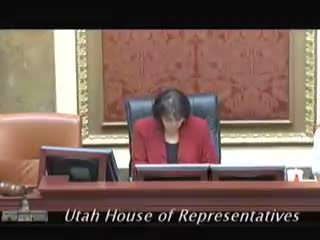
The Utah House moved a large number of committee recommendations and consent-calendar bills on Feb. 28, 2011, disposing of routine and substantive items across health, transportation, education and procedural rules.
Key outcomes - HB 351 (Homeless Coordinating Committee Modifications) — passed 69–0. The bill places the Lieutenant Governor on the state Homeless Coordinating Committee and designates the Lieutenant Governor as chair (Representative Val Petersen). - HCR 13 (Secure Rural Schools concurrent resolution) — passed 68–2. Representative Noel described the federal Secure Rural Schools program (Public Law 106-393) history and urged continued federal funding. - Second Substitute SB 61 (Education for Prescribing Controlled Substances) — passed 65–6 (Representative Daw). The measure directs four continuing medical-education hours be dedicated to prescribing controlled substances as part of licensure requirements. - SB 128 (Regulatory amendments expanding dispensing authority) — passed 70–0 (Representative Vickers). - SJR 14 (Communications Device Usage Joint Resolution) — passed 70–0 (Representative Dougal). - HJR 38 (apology/apology-law coordination on evidence law) — passed 70–0 (Representative Dunnegan). - HB 169 (firearms conformity with federal law) — passed 69–0 (first substitute). - HB 411 (Approaching Stationary Emergency Vehicle Amendment) — passed 69–2. - HB 444 (Operation and Maintenance Needs Report for Utah Highways) — passed 70–0. - HB 130 (Election Day Voting Centers pilot) — passed 71–0.
Clerks recorded the roll-call tallies noted above during the Feb. 28 session. Many other bills were introduced and assigned to Rules or to standing committees later in the session; the Rules Committee reported assignments for a package of bills to be handled in subsequent committee work.
What it means The votes clear a range of administrative, regulatory and ceremonial items while freeing up committee calendars for follow-up work. Several measures with fiscal implications were referred to Rules for prioritization or fiscal-note completion before final action. The session adjourned until Mar. 1, 2011.