Get Full Government Meeting Transcripts, Videos, & Alerts Forever!
Get email alerts on the Public Lands Enabling Act topic
No spam. Unsubscribe anytime.
House approves resolution urging self-sufficiency and calling attention to the Enabling Act
Summary
HJR31, a resolution encouraging Utahns toward self-sufficiency and urging Congress to honor provisions of Utah’s Enabling Act regarding disposal of public lands, passed the House 54–13 after extended debate over historical and legal interpretations.
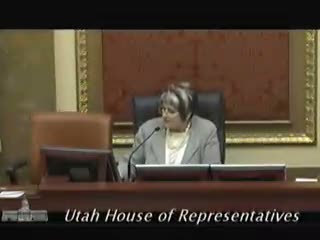
The Utah House passed HJR31 on March 3, 2011, a resolution urging citizens and federal authorities to pursue policies that reduce dependence on federal dollars and to honor promises in Utah’s Enabling Act regarding disposition of public lands. The resolution passed 54 yes to 13 no and will be transmitted to the Senate.
Representative Harris (sponsor) framed the resolution as a call for greater state self-sufficiency and argued federal land disposition has disadvantaged western states economically and educationally. Harris told colleagues that roughly half of Utah’s budget comes from the federal government and that the state’s revenue position could require renewed attention to the enabling framework.
Floor debate explored the legal and historical foundation of the sponsor’s language. Representative King and others pressed the sponsor to point to exact “equal footing” language in the Enabling Act; the sponsor acknowledged the document does not use the precise phrase but said the Act’s repeated use of the word “shall” indicates a commitment to disposition of lands that has not been honored. Representatives Cox and Barris provided historical and constitutional context describing the enabling and equal-footing traditions.
Opponents and skeptics raised constitutional and practical concerns. Representative Christiansen reserved the right to amend and emphasized caution about any language that could be read as conceding legal rights. Representative King also noted a constitutional note attached to some immigration-related bills and argued caution when running resolutions with potential legal implications.
After additional supportive remarks and procedural closure, the House adopted HJR31. The sponsor stated the resolution is intended as an advocacy instrument toward Congress and state leadership rather than an immediate legal remedy.