Get Full Government Meeting Transcripts, Videos, & Alerts Forever!
Get email alerts on the Immigration topic
No spam. Unsubscribe anytime.
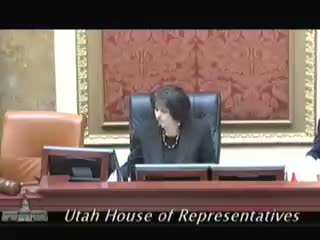
Utah House debates HB70 immigration enforcement bill; sponsor defends changes as opponents warn of profiling
Summary
Rep. Sandstrom opened floor debate on HB70, an immigration enforcement measure; sponsors framed it as enforcement with humanitarian carve-outs, while opponents raised concerns about racial profiling, costs to local governments and impacts on shelters. Amendment 5 (narrowing private‑action language) passed 45-27; final passage was not recorded in the transcript.
Representative Corey Sandstrom, sponsor of House Bill 70, told the Utah House that the measure is intended to provide law enforcement tools and to curb fraudulent use of state‑administered public benefits, while explicitly excluding criminal penalties for unauthorized presence in the state. "This is the Utah Immigration Enforcement Act. This is not the Arizona immigration bill," Sandstrom said in floor remarks defending the measure and several technical changes he had negotiated.
The bill would allow officers to inquire about immigration status when a person is detained for a crime, and tighten verification for some state benefits, sponsor said. Sandstrom told colleagues the state’s own statistics suggest the measures could produce large savings, saying it "could save as much as $300,000,000 over the next few years," a figure he attributed to state data during his presentation.
Opponents pressed the sponsor on the bill’s potential to enable racial profiling and to chill participation in humanitarian services. "HB70 creates mistrust, fear, discrimination and intolerance in communities," Representative Seelig said, arguing the bill would harm Latino and other immigrant communities and urging comprehensive federal reform instead. Lawmakers asked repeatedly how the measure would affect domestic violence shelters and other humanitarian services; Sandstrom replied that the bill carves out exemptions for religious and humanitarian aid and does not require immigration verification for shelters.
Floor amendments narrowed and altered several provisions. Early in debate sponsor offered Amendment 4 to delete a reference to a writ of mandamus; that technical change was adopted as part of floor amendment activity. Representative McKiff offered Amendment 5 to remove broadly phrased language he said could create a private cause of action and to narrow the means by which local policy decisions could be challenged; members approved Amendment 5 by recorded division, 45 yes to 27 no. McKiff described his amendment as trimming language that would have allowed private suits against municipalities and said the change preserves the bill’s policy while reducing litigation exposure.
Other lawmakers urged complementary measures to address guest‑worker or legal sponsorship channels, and opponents warned of unfunded local costs for verification and for potential diversion of law‑enforcement resources. Representative Draxler and others said the package remains incomplete without meaningful guest‑worker provisions. Several members also emphasized that the bill, as amended on the floor, retains discretion for local law enforcement: under the sponsor’s approach officers would inquire about status for Class A misdemeanors and felonies and may inquire for lesser offenses.
The transcript shows multiple rounds of questioning, amendments and extended debate but does not record a final passage vote for HB70 within this excerpt. The most recent procedural actions in the transcript are the adoption of floor amendments and the 45‑27 vote on Amendment 5. Further action, including final passage or additional amendments, would be recorded in subsequent proceedings.