Get Full Government Meeting Transcripts, Videos, & Alerts Forever!
Get email alerts on the Emergency Management topic
No spam. Unsubscribe anytime.
House approves emergency-management bill clarifying coordination and renaming division
Summary
House Bill 80 passed 68–0 to rename the state's Division of Homeland Security to the Division of Emergency Management, clarify incident coordination from local to federal levels, authorize a State Coordinating Officer (SCO), and allow geographic regions and rulemaking for disaster response.
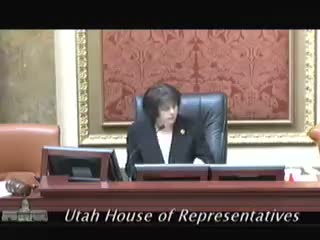
The Utah House on Feb. 17 passed House Bill 80, a comprehensive emergency-management bill that renames the Division of Homeland Security to the Division of Emergency Management and clarifies the order of coordination during disasters (local to county to state to federal).
Sponsor Representative Ota said the change is intended to avoid public confusion between homeland-security functions (which often carry law-enforcement connotations) and emergency-management responsibilities. "This is the issue of what is the process or what is the order of the process between the local to the county to the state to the federal government," the sponsor said, explaining the bill clarifies that the state will not take over local functions unless requested.
The bill authorizes the division to receive and disperse federal disaster funds, appoint a State Coordinating Officer to represent the governor in interactions with FEMA, create geographic regions for efficiency, and adopt rules for prevention, mitigation, preparedness, response and recovery. The sponsor said the bill does not change services or federal funding and that most states use "emergency management" as the agency title.
After presentation and brief discussion, the House approved the bill on final reading by recorded vote, 68–0. The bill will be transmitted to the Senate for consideration.
What happens next: if enacted, administrative rules will follow to implement coordination protocols and the SCO appointment process.