Get Full Government Meeting Transcripts, Videos, & Alerts Forever!
Get email alerts on the Local Government Fees topic
No spam. Unsubscribe anytime.
House approves bill limiting some local fee authority, citing Salt Lake County police fee
Summary
First substitute HB 226 passed the House 54–17 after sponsors said the measure would prohibit certain local fees and exempt small-class counties; sponsors framed the bill as restoring policy clarity for special service districts and giving counties time to adjust via a delayed effective date.
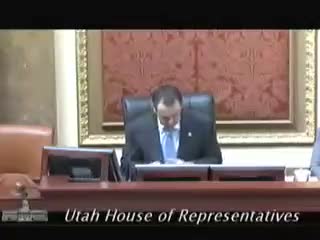
The Utah House on Feb. 7 passed first substitute House Bill 226, Local Government Fee Authority, 54–17 after debate and an amendment that narrowed the bill’s immediate impact on certain small counties.
Sponsor Representative Harper said the bill seeks to clarify when local political subdivisions may impose fees, and pointed to recent use of a fee by a special police district in Salt Lake County as an example of a mechanism the bill would restrict. Harper explained he proposed an amendment to exclude fourth-, fifth- and sixth-class counties from certain provisions after members raised concerns about longstanding, locally authorized fees used to fund services such as volunteer fire stations in remote areas. "It was brought to my attention ... that this bill in its current format would go through an effect to counties who have authorized ... a fee that would be repealed by this bill in Sanpete And Wasatch Counties," Harper said when offering Amendment Number 1, which the floor adopted.
During debate members described different policy rationales. Representative Dunigan argued the legislature had authorized unified district structures and should act to remove fees that arose after counties used creative mechanisms to balance budgets. Representative Biskupski declared a personal conflict and clarified that in Salt Lake County the fee was implemented by a special police district, not by the county government or the sheriff's office. Opponents argued the House would be usurping local authority and urged local control; Representative Litvak warned the measure could "usurp the decision of a local entity."
Sponsors said the bill’s amendments delay changes to allow counties to plan, and the House recorded the vote as "first substitute House Bill 226 having received 54 yes votes and 17 no votes," sending the measure to the Senate for consideration.
Next steps: The bill will be transmitted to the Senate. Floor debate focused on distinguishing counties and districts, the source of fees and whether the Legislature should limit local fee authority; sponsors emphasized a delayed implementation to avoid immediate budget-year impacts.