Get Full Government Meeting Transcripts, Videos, & Alerts Forever!
Get email alerts on the Budget topic
No spam. Unsubscribe anytime.
House approves several first‑substitute base budget bills, including cuts aimed at a 7% target
Summary
The Utah House passed first‑substitute versions of several base budget bills (HB5, HB6, HB7, HB8) on Feb. 1, 2011. The substitutes carry an overall 7% base reduction target and include proposed cuts to corrections, capital improvement funds, and health and human services line items; each bill was recorded with a floor vote and sent to the Senate.
The Utah House on Feb. 1 voted on a set of substituted base budget bills intended to implement leadership’s 7% reduction target and to create a starting point for further appropriations work.
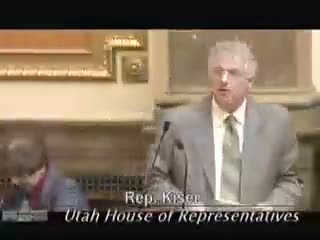
Business, Economic Development and Labor (first substitute House Bill 5): Representative Keiser presented the substitute, which the committee said addressed line‑item issues identified in subcommittee work. The substitute reflects roughly $600 million in federal funds and dedicated credits and about $106 million from general and education funds; members described the substitute as a surgical approach to meeting the 7% target. First substitute HB5 passed the House 56–15 and will go to the Senate.
Corrections and core government (first substitute House Bill 6): Representative Hutchings and committee members described proposed cuts required to meet a 7% base reduction. The presentation warned of closures of multiple prison housing units and projected the early release of roughly 850 inmates by July if bed capacity is not expanded; lawmakers also discussed eliminating liquor‑law enforcement, a DUI squad and the possible temporary closing of some rural courthouses. Members urged careful follow‑up to avoid undermining public safety; first substitute HB6 passed 49–21.
Infrastructure/general government (first substitute House Bill 7): Representative Froehler said the committee’s substitute for HB7 reduced roughly $9.845 million from the committee’s base — about 88% of that from capital improvement funds (approximately $8.696 million). Speakers warned that cutting capital maintenance risks higher future costs and urged lawmakers to restore funds where possible later in the session. First substitute HB7 passed 53–14.
Social services (first substitute House Bill 8): The combined Social Services Appropriation Committee presented a package covering Health & Human Services, Workforce Services and Rehabilitation. Committee leadership said the combined budget oversees nearly $4 billion in appropriations, with roughly $663 million from general and education funds; line‑item reductions included Medicaid, CHIP and other programs aimed at achieving the 7% target. Members cautioned that trimming certain services could shift costs to counties, nonprofits or increase hospital and emergency expenditures. First substitute HB8 passed 55–16.
The votes mean all four substituted base budget measures will be transmitted to the Senate for consideration. Sponsors and committee chairs emphasized these are starting points and said they expect further adjustments in the weeks ahead as lawmakers return to caucuses and work to prioritize restorations and program protections.
Vote tallies (floor announcements): First substitute HB5 — Passed 56 yes, 15 no; First substitute HB6 — Passed 49 yes, 21 no; First substitute HB7 — Passed 53 yes, 14 no; First substitute HB8 — Passed 55 yes, 16 no.
What to watch: Committee chairs signaled follow‑up adjustments to protect high‑priority programming (for example, sex‑offender treatment and critical capital maintenance). Discussions over jail contracting, county burdens and long‑term corrections capacity will likely reappear as the session turns to supplemental choices and restoration efforts.