Get Full Government Meeting Transcripts, Videos, & Alerts Forever!
Get email alerts on the Judiciary Reform topic
No spam. Unsubscribe anytime.
Utah chief justice pushes statewide "eEverything," discovery reform and oversight of drug courts amid staffing cuts
Summary
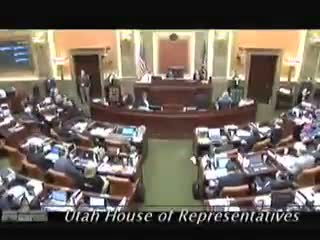
Chief Justice Christine Durham told the Utah House in a committee of the whole that the courts will move to a statewide electronic record, pursue civil discovery reforms and continue oversight of 52 drug/problem-solving courts while managing permanent staff reductions and budget constraints.
Chief Justice Christine Durham told the Utah House in a committee of the whole that Utah’s courts are accelerating a shift to a fully electronic record and pressing forward with civil discovery reforms while managing persistent staffing and budget pressures.
Durham framed the plan as a response to sustained caseload growth and recent budget reductions, saying the courts must ‘‘organize ourselves efficiently’’ and use technology and performance measurement to preserve access to justice. ‘‘We’re moving to the use of an electronic record for all court business at all court levels in every court in the state, something that is yet to be done in any state court system,’’ she said.
The chief justice placed those technical changes in the context of scale and mission. She told lawmakers that state courts handle the vast majority of U.S. legal disputes and gave several figures to illustrate the volume: roughly 385,000 filings in federal courts for the most recent year reported and, she said, more than 47,000,000 filings in state courts nationally. Locally, Durham said Utah receives about 4,500 new filings each business day—‘‘over 950,000 new cases every year.’’
To manage that volume with fewer people, the judiciary has undertaken structural reforms. Durham described a clerical restructuring that replaced hierarchical supervision with teams of generalists and a shift from longevity-based pay to competency-based compensation for clerical staff. She said the nonjudicial workforce has been permanently reduced by more than 9% while filings remain ‘‘16% above their pre-recession 02/2008 levels.’’
Technology rollout plans include statewide e-filing of civil cases, electronic payments for fees and fines, e-documents, and expansions such as e-warrants and e-citations. Durham cautioned that criminal e-filing requires an interface with prosecutors’ information systems before a full rollout. She said the digital changes will cut paper handling and speed record preparation for appeals.
Durham also highlighted a pending overhaul of civil-discovery rules. She said the Supreme Court’s Advisory Committee on the Rules of Civil Procedure has worked for two years on ‘‘a radical restructuring’’ intended to reduce expense and delay; she noted Utah would be among the earliest states attempting such reforms.
The chief justice described continued oversight of drug and other problem-solving courts, which now include specialty dockets for mental illness, veterans, homelessness and DUI cases. She said the judiciary requires applicants to demonstrate compliance with 10 key components of effective drug courts and conducts on-site observations through a certification process. ‘‘We have 52 of them statewide,’’ Durham said, and most state funding for those courts comes through the Division of Substance Abuse and Mental Health, with treatment expenses comprising the chief costs.
Durham said the judiciary measures the impact of these changes using ‘‘Core Tools,’’ a publicly available set of performance measures intended to track productivity, direction and speed. She warned the transition remains ‘‘fragile’’ because 93% of the judicial branch’s general fund budget is personnel and further cuts would have to come from the staff tasked with implementing the reforms.
She closed by thanking legislators and urging continued partnership as the courts implement the changes. The committee of the whole was subsequently dissolved by unanimous vote and the House adjourned.