Get Full Government Meeting Transcripts, Videos, & Alerts Forever!
Get email alerts on the Legislation topic
No spam. Unsubscribe anytime.
Utah House refuses to concur with Senate on bill to repeal HB 477 after debate over special-session timing
Summary
On March 25, 2011, the Utah House voted to refuse to concur with Senate amendments to House Bill 1001 (a repeal of HB 477). Debate centered on whether a requested special-session date was premature and whether scheduling would interfere with upcoming redistricting work; the House asked the Senate to recede.
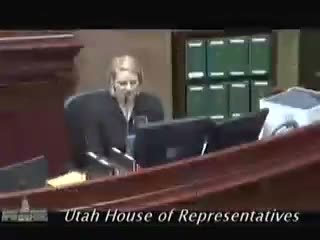
SALT LAKE CITY — The Utah House of Representatives voted by voice on March 25, 2011, to refuse to concur with Senate amendments to House Bill 1001, a measure that would repeal House Bill 477. The motion to refuse to concur, moved on the floor and restated by the presiding officer, passed after members debated timing and process.
Representative Jay Dougal, whose name appears on the bill, read a Senate amendment that would ask the governor to call a special session “no later than June 24” to consider changes to government records provisions and said he was concerned that the date might be too soon. “I do have concerns with the First Amendment,” he said on the floor.
Members split over procedure and pace. Representative Cox said the earlier change to a July 1 target had been intended to allow time for discussion and to develop a better replacement for HB 477; he said he did not object to the aim of replacing the law and spoke in favor of concurring with the Senate’s amendment. Representative Hutchings said tying the records work to a fixed near-term date while the legislature faces redistricting next year risked politicizing or rushing the process: “Let’s do the work. Let’s stay focused on it,” he said, arguing against imposing a hard date that could derail deliberations.
Several members urged a clean repeal or more time. Representative Briscoe said he favored refusing to concur and called for a “clean surgical repeal,” arguing the public did not yet perceive systemic problems that would justify immediate repeal with strict deadlines. Representative Julie Fisher also supported refusing to concur, saying complex issues sometimes take months of work and public input.
Representative Seggers called the previous question — a procedural move to end debate — which passed. Summation by the mover was waived and the House proceeded to the voice vote on the motion to refuse to concur; the presiding officer announced the motion passed. The clerk was instructed to forward the House’s communication to the Senate asking it to recede. The Senate may recede, or it may refuse and appoint a conference committee; the presiding officer told members that a conference committee would likely be time-consuming.
The House’s action does not by itself change law. If the Senate refuses to recede, the two chambers may negotiate in a conference committee or pursue other procedural options. The communication from the Senate that prompted the floor debate was read into the record and signed by Annette B. Moore, Secretary of the Senate.
Next steps: the House has sent its request that the Senate recede to the Senate; the Senate’s response — whether to recede or to pursue a conference committee — will determine whether further negotiations are scheduled.