Get Full Government Meeting Transcripts, Videos, & Alerts Forever!
Get email alerts on the Higher Education topic
No spam. Unsubscribe anytime.
House approves joint Utah State–Washington State veterinary school with 4‑year practice requirement
Summary
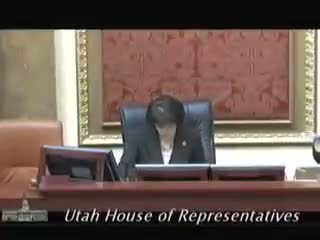
The Utah House passed House Bill 57 on Jan. 27, 2011, to create a joint professional school of veterinary medicine between Utah State University and Washington State University, adding an amendment requiring graduates to practice in Utah for four years. The bill passed 48–23 after extensive debate over cost, workforce needs and fiscal commitments.
Representative Mathis presented House Bill 57 to establish a joint professional school of veterinary medicine: the first two years of instruction would be at Utah State University and the clinical years at Washington State University in Pullman. He said the program aims to train about 20 in‑state students and attract about 10 out‑of‑state students per entering class, expanding capacity compared with current WICHE placements (20 in‑state, 10 out‑of‑state per class proposed) and reinvesting funds that now pay out‑of‑state tuition.
Debate focused on workforce benefits and cost. Supporters, including Representatives Webb, Handy and Noel, argued the program addresses a shortage of large‑animal veterinarians in rural Utah and protects a farm and ranch economy Representative Noel described as a roughly $15,000,000,000 industry. Representative Mathis said partnering with Washington State is a cost‑effective alternative to building a full four‑year in‑state program, estimating standalone costs could exceed $10,000,000 annually.
Opponents raised fiscal concerns. Representative Dougal pointed to the bill's fiscal note of $1,700,000 and questioned whether the appropriation would grow in later years; members noted a possible future additional ask of about $1,300,000 that had been discussed in committee, though Mathis said that additional payment would be a separate discussion and was not required for the bill to proceed. Members also debated whether funds should instead be directed to primary care physician training.
An amendment offered by Representative Johnny Anderson — to add language that admitted students "agree to practice veterinary medicine for four years in Utah upon graduation" — drew sharp exchanges. Anderson argued taxpayer investment should return a measurable in‑state benefit; opponents argued WICHE historically did not require return and that coercive practice requirements risk distorting professional markets. The House adopted the amendment and then, after further discussion and a summation by Mathis (who disclosed he is a practicing veterinarian), passed the bill as amended, 48–23. The bill will be transmitted to the Senate for consideration.
Key numeric details noted on the floor: the WICHE program currently supports roughly five veterinary students per year at a state cost the sponsor said totaled about $580,000 annually; the joint program was described as enabling 20 in‑state slots per class; and the bill carried a fiscal note of $1,700,000 with discussion that additional future appropriations might be sought but were "not associated with this bill." Representative Mathis said the program would strengthen Utah State's agricultural and veterinary education capacity while keeping significant training dollars in Utah.
The House recorded the final vote on HB57 as 48 yes and 23 no; the bill advances to the Senate. The sponsor said he would seek to work with the Senate and appropriators on funding details and implementation if the Senate concurs.