Get Full Government Meeting Transcripts, Videos, & Alerts Forever!
Get email alerts on the Energy Policy topic
No spam. Unsubscribe anytime.
Congressman Matheson urges balanced energy push, defends NDAA vote during Utah House visit
Summary
Congressman Matheson addressed the Utah House on energy policy, defended his vote on the National Defense Authorization Act and answered members’ questions on oil‑and‑gas permitting and Utah Navajos’ royalty share.
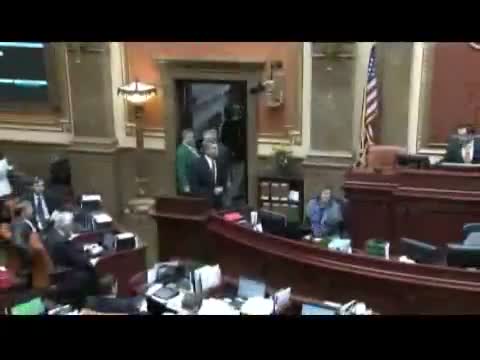
Congressman Matheson visited the Utah House floor to brief members on federal activity and policy priorities, focusing his remarks on tax relief and a broad energy agenda that includes domestic oil and natural gas development, support for natural‑gas infrastructure and research into oil‑shale technologies.
Matheson opened by noting his recent vote for a bipartisan payroll‑tax extension, saying the measure will keep money in Utah households’ pockets this year and help the economy. He then outlined what he described as an "all of the above" energy strategy that would let multiple technologies compete: "New technology is allowing us to increase domestic oil and gas production," he said, and added that oil shale could be "a true game changer for American energy supply" if commercial production proves viable.
Why it matters: Matheson tied energy proposals to jobs and Utah’s economic interests, arguing that more domestic production and clearer federal rules will support job growth in the state’s natural‑resource sector. He cited recent votes and amendments he supported to expand leasing options and to study the cumulative costs of forthcoming EPA rules.
During a question‑and‑answer period, members pressed Matheson on several topics. Representative McKay asked about his vote on the National Defense Authorization Act; Matheson said contentious language on detention that had circulated online had been removed in conference and that "there is specific language in the conference report that says that no citizen is subject to unlimited detention." He invited members to read the final conference report as the basis for his vote.
Members also raised permitting delays by the Bureau of Land Management for APDs (applications for permits to drill). Rep. Noel described multi‑year delays and asked whether the state could assume primacy; Matheson acknowledged chronic delays and said he was open to exploring whether the state could assume a more timely role on certain permitting steps, but stressed that any change would require careful legal and policy work.
On the Utah Navajos’ share of oil and gas royalties, several members urged federal action to preserve a 37.5 percent allocation for Utah residents of San Juan County. Matheson said the situation is legally and historically complicated — the state previously served as trustee and subsequently relinquished that role — but he pledged to continue advocating with colleagues while noting challenges around drafting precedent‑setting legislation and finding a trustee with appropriate creditworthiness.
The session concluded without new federal commitments beyond Matheson’s pledge to keep working with Utah’s delegation and congressional committees; members thanked the congressman for the update.