Get Full Government Meeting Transcripts, Videos, & Alerts Forever!
Get email alerts on the Public Health topic
No spam. Unsubscribe anytime.
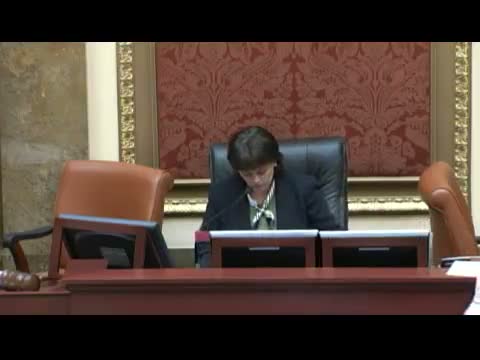
Utah House approves tighter rules on minor tanning after hours of debate
Summary
After prolonged floor debate over parental involvement and enforcement, the Utah House passed the fifth substitute of Senate Bill 41 to increase parental consent and local health-department oversight for minors using commercial tanning beds; the bill passed 39–32 and moves back to the Senate.
The Utah House passed a tightened set of restrictions on commercial indoor tanning for minors after an extended debate Wednesday, approving the fifth substitute of Senate Bill 41 by a 39–32 roll call.
Representative Becky Wilson, the House sponsor, told colleagues the measure is aimed at reducing melanoma cases among young people and ‘‘give[ing] parents the ultimate ability to be in charge of when and how much their children tan.’’ Wilson recounted medical testimony and a patient story given to the legislature, saying of one patient’s family: "She died in October of last year at age 36 with an 8 year old." She added, "To summarize, I know that this bill will save lives." (Representative Wilson)
Why it matters: Supporters framed the bill as a public-health intervention to address rising melanoma rates among Utah residents and to strengthen parental involvement where enforcement of the current annual-consent rule has been uneven. Opponents argued the measure is an undue regulatory burden on small businesses or that it does not go far enough if the goal is outright prohibition.
What the bill does: The fifth substitute requires stronger parental involvement and grants local health departments permitting and enforcement authority over tanning facilities that serve minors. Supporters said the bill also mandates stronger consumer education in facilities (including prominent warnings in large type and educational materials) and allows local jurisdictions to inspect and permit tanning establishments.
Key claims and back-and-forth: Representative Wilson and other backers cited local health studies and committee testimony that indicated low compliance with the existing annual parental-consent process and warned of elevated melanoma risks when tanning begins before age 18. Representative Hughes, who offered a substitute during floor debate, described his version as a ‘‘measured approach’’ intended to increase enforcement and education without unduly burdening businesses. Opponents, including representatives who said they had constituents opposed to requirements that parents be present for each visit, described the sponsor’s proposal and Hughes’s substitute as either ‘‘too onerous’’ or an improper expansion of government over private business.
Notable quotations: "This bill will save lives," Representative Wilson said, urging passage on public-health grounds. Representative Hughes called his substitute a "measured approach" that emphasizes enforcement and education. Representative Barlow, a physician-lawmaker speaking in favor of the stricter measure, said the risk of melanoma is serious enough to justify regulation, calling the disease metaphorically "a loaded gun." (Representative Barlow)
Vote and next step: Fifth substitute Senate Bill 41 passed the House on a 39–32 vote and will be returned to the Senate for its consideration and potential concurrence on the adopted changes.
What’s next: The bill returns to the Senate where sponsors will seek concurrence with the House substitute or engage in negotiations if the Senate objects. No fiscal or implementation dates were finalized on the House floor at the time of passage.