Get Full Government Meeting Transcripts, Videos, & Alerts Forever!
Get email alerts on the Public Lands topic
No spam. Unsubscribe anytime.
Rep. Rob Bishop urges Utah to lead a ‘paradigm shift’ on public lands
Summary
Congressman Rob Bishop told the Utah House that Western states must reframe public-lands policy to secure revenue and local control, warning that eastern policymakers misunderstand the West and that states should prepare to manage or jointly manage federal lands. Members pressed him on PILT, road closures and coordination.
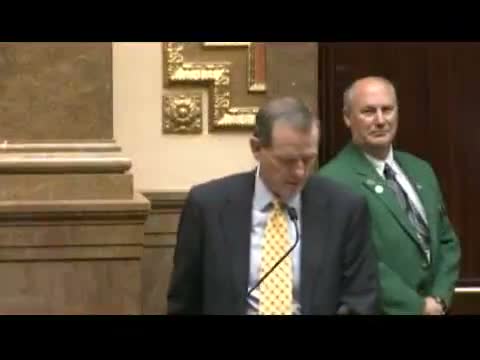
Congressman Rob Bishop visited the Utah House in the Committee of the Whole and told members the West should forge a new approach to federal public lands management that emphasizes state responsibility and revenue generation.
“All I need is one arrow to get over the wall and hit its mark,” Bishop said, urging Utah lawmakers to keep pushing measures that shift federal control and bring revenue and management closer to affected communities. He used maps to contrast how much private property funds education in eastern states with the large share of federally owned land in the West.
Bishop told representatives that his message to colleagues in the East is practical: they must understand how public lands affect education and infrastructure funding in Western states. He noted that national parks receive large shares of federal land budgets while Bureau of Land Management holdings — more extensive in the West — do not generate equivalent revenue for local services.
During a question-and-answer period, Representative Noel described a San Juan County complaint that BLM employees used bulldozers to close a long-standing county road and alleged the agency acted without NEPA compliance or consultation; he said local residents had previously been fined heavily for repairing roads. Bishop replied that the example underscores the need to clarify federal action’s local effects and to press for change.
Representative Ivory asked Bishop to elaborate on effects to school funding if PILT (Payments in Lieu of Taxes) and SRS (Secure Rural Schools) payments were reduced. Bishop said those federal payments cannot be assumed permanent and argued states must consider alternatives that allow lands to “produce the revenue that goes back to local communities.”
Lawmakers across the aisle praised Bishop’s tone and focus on education and urged continued coordination between the state and its federal delegation. Several representatives said they plan to coordinate closely as the state advances its public-lands bills.
The visit closed with the House thanking Bishop for appearing; members later dissolved the Committee of the Whole and resumed the regular session.