Get Full Government Meeting Transcripts, Videos, & Alerts Forever!
Get email alerts on the Severance Tax topic
No spam. Unsubscribe anytime.
House circles severance tax substitute that would phase funds into permanent trust
Summary
Lawmakers debated a substitute to phase severance-tax receipts into the permanent state trust fund over multiple years; supporters said it preserves resources for future generations, while others pushed for an amended fiscal note. The House voted to 'circle' the substitute for further review.
The Utah House spent a prolonged floor period debating House Bill 210, a proposal to redirect severance-tax receipts gradually into the state's permanent trust fund.
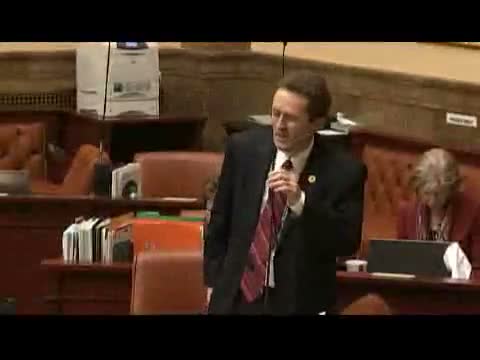
Representative Stephen Nielsen framed the measure as a long-term fiscal correction, saying that moving severance revenue into the permanent state trust fund will protect nonrenewable-resource receipts for future generations. “If we pass this legislation… I believe it is the most significant thing we will do this session,” Nielsen said, urging a phase-in to avoid sudden budget impacts.
The substitute phases deposits into the trust fund over several years in roughly $20 million increments, proponents said, using an estimated $96 million in expected severance-tax receipts as the basis for calculations. Opponents, including Representative Litvak, pressed for an amended fiscal note and asked for the bill to be circled so staff could produce updated fiscal documentation reflecting the substitute's phase-in schedule.
Supporters said the proposed approach shifts scarce, nonrenewable-resource revenue from recurring general-fund spending into a fund whose earnings could provide future budget stability. Critics warned the change reduces immediately available general-fund dollars and pressed leaders for a formal, updated fiscal analysis before final action.
The House voted to circle the substitute—delaying final passage—so an amended fiscal note and further consideration could occur. Floor debate highlighted competing fiscal priorities: building a trust for future generations versus preserving current-year budget capacity for services.
Because the motion to circle passed, the measure will be held for further fiscal documentation and cannot proceed to final passage on that day.