Get Full Government Meeting Transcripts, Videos, & Alerts Forever!
Get email alerts on the Higher Education Governance topic
No spam. Unsubscribe anytime.
House approves bill to give governor role in selecting higher-education commissioners
Summary
The Utah House passed Senate Bill 39 after heated debate over whether giving the governor a formal role in selecting higher-education commissioners would politicize academic leadership; the measure passed 39–34 and goes back to the Senate.
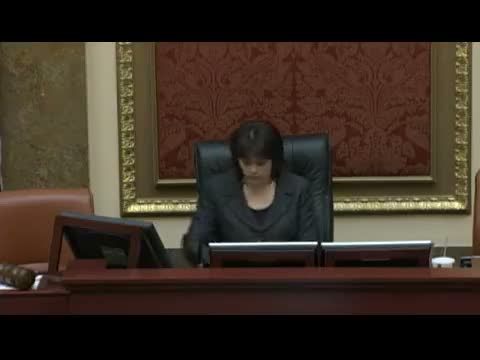
The Utah House voted to approve Senate Bill 39, a measure that increases the governor’s role in selecting senior higher-education officials, after a floor debate that exposed deep reservations about politicizing academic appointments.
Representative Wright, the House sponsor, told colleagues the measure would change “the governance of the way that, higher education, our commissioner, and the state board of regions, over the higher ed is chosen,” arguing the change would improve cooperation between higher education institutions and state government. He said involving the executive and Senate confirmation would be “a good start in the right direction.”
Opponents said the bill undermines the independence of academic leadership. “I stand in opposition to this legislation, which passed our committee in a very close vote,” Representative Arendt said, contending that shifting selection to elected officials risks exposing commissioners to political pressure and weakens their standing with college presidents.
Members questioned how the Board of Regents’ responsibilities would change and whether the board would still perform searches and interviews. Wright responded that the boards would continue their searches and present candidates to the governor, who would then have approval authority; the sponsor characterized the change as adding executive and legislative review “to put everybody in the loop.”
After discussion and formal summation, the House adopted the bill by roll call, 39 yes to 34 no. The measure will be signed by the Speaker and returned to the Senate for the president’s signature and any further action there.
The House record shows a close, substantive debate focused on governance, the proper degree of political oversight of academic administration and the tradeoffs between coordination and institutional independence. Next steps are the standard Senate confirmation process and implementation details to be worked out if the Senate concurs.