Get Full Government Meeting Transcripts, Videos, & Alerts Forever!
Get email alerts on the Criminal Justice DUI topic
No spam. Unsubscribe anytime.
House circles bill that would close plea-in-abeyance gap for impaired-driving offenses after extended debate
Summary
After hours of floor debate, the House circled first substitute Senate Bill 152, which would remove plea-in-abeyance options for certain alcohol- and drug-related driving offenses and close an identified gap dating to 2008; sponsors and opponents differed on impacts to judicial discretion and juveniles.
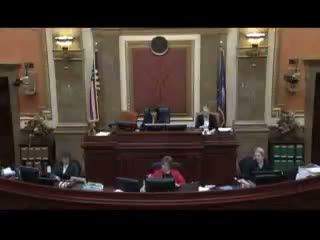
The Utah House spent a protracted floor session debating first substitute Senate Bill 152, a change to how courts may handle alcohol- and drug-related driving offenses, and ultimately agreed to circle the measure for further work. Representative Ryan Wilcox, the House sponsor, said the bill is meant to close a statutory gap dating to February 2008 and to ensure that those who repeatedly drive impaired are accountable.
"We're not particularly biased if it happens to be alcohol when you're driving down the boulevard at midnight, or whether it's something else," Wilcox said, arguing the effect of impairment on public safety is the same regardless of substance and that the change would prevent serial offenders from ‘‘falling between the cracks.’’
Opponents urged caution. Representative Christiansen said removing plea-in-abeyance options could eliminate a valuable judicial tool for treating some offenders, especially minors, and for allowing rehabilitation without a permanent conviction. "Where's the mercy?" he asked on the floor. Representative Redd, a physician, raised hypothetical cases where a prescribed medication caused impairment and questioned whether the bill would unintentionally punish patients.
Several members asked whether the bill treats juveniles differently; Wilcox said the bill does not change existing juvenile code and that any concerns about minors would remain as they are under current law. Other lawmakers proposed narrowing the change to ‘‘repeat’’ pleas or limiting application only to certain prior plea-in-abeyance instances; the sponsor opposed creating differing standards.
Rather than vote on final passage, several representatives—including Representative Dee and Representative Barlow—requested more time to craft clarifying language. The House granted a motion to circle the bill so sponsors and interested members could work on amendment language off the floor.
What happens next: circling a bill generally pauses floor action to allow sponsors to draft substitutions or amendments. The transcript records a range of specific questions—on minors, on medical-caused impairment, and on whether the bill reopens policy decisions from 2008—that lawmakers asked sponsors to resolve before returning the bill to the floor.