Get Full Government Meeting Transcripts, Videos, & Alerts Forever!
Get email alerts on the Education Funding topic
No spam. Unsubscribe anytime.
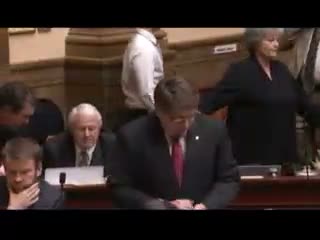
House rejects one-year $7.4 million shift from alcohol revenue to K–12 funding
Summary
After hours of debate on March 7, 2013, the Utah House voted 33–39 to defeat Second Substitute HB 271, a one-year plan to move about $7.4 million in future Department of Alcoholic Beverage Control (DABC) revenue into the state's Weighted Pupil Unit (WPU) to cover anticipated shortfalls.
The Utah House of Representatives on March 7 debated and then rejected a one-year proposal to move a portion of future alcohol-tax revenue into K–12 funding. Second Substitute House Bill 271, sponsored by Representative Jared Byrd, would have redirected roughly $7.4 million from anticipated DABC receipts into the WPU for public education for one fiscal year.
Byrd told colleagues the measure is a temporary ‘‘plug’’ to help districts through an impending shortfall tied to sequestration and a clerical error. ‘‘What are we gonna do next year to take care of these children?’’ Byrd asked, urging members to approve a short-term fix while longer-term solutions are developed.
Opponents said the proposal set a bad precedent of relying on alcohol revenue for education and risked reducing funds for existing priorities. Representative Moss said it was ‘‘a shame that we would start funding education from liquor tax,’’ and Representative Nielsen warned that diverting those dollars could undermine programs already funded from the same stream, such as school lunches. Representative Christiansen framed the debate as a question of principle: ‘‘Revenue is not revenue,’’ he said, arguing that tying sporadic or dedicated funds to ongoing programs creates unstable policy precedent.
Members also clashed over whether the bill would harm public safety allocations. Representative Greenwood asked whether funds earmarked for law enforcement and impaired-driver programs would be reduced; Byrd responded that the bill would shift future, not current, dollars and would not cut currently allocated enforcement funding.
The chamber adopted a motion to end debate and moved to a final vote. Second Substitute HB 271 failed, receiving 33 yea votes and 39 nay votes; the measure will be referred for filing.
The debate included multiple amendments and procedural steps before the final tally; backers described the measure as a one-time transfer designed to be temporary, and opponents said the Legislature should preserve annual budgetary control and avoid creating earmarks by statute. With the bill defeated, lawmakers continued work on other budget and policy items on the calendar.
Next steps: Because the bill failed on the House floor, proponents may pursue alternative budget fixes in conference with the Senate or through future legislation.