Get Full Government Meeting Transcripts, Videos, & Alerts Forever!
Get email alerts on the Education Grant topic
No spam. Unsubscribe anytime.
Student leadership grant fails on 37–37 tie after debate over vendor choices and funding
Summary
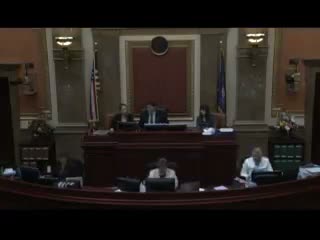
Senate Bill 122, which would have established a $250,000 one‑time grant for student leadership skills programs administered by the State Office of Education, failed on a 37–37 tie in the House after opponents called it a vendor bill and members briefly placed the chamber in a call of the house to secure a quorum.
Senate Bill 122, sponsored in the House by Representative Hughes, would have established a one‑time $250,000 grant administered by the State Office of Education to expand a student leadership and soft‑skills program in K‑3 schools. "This establishes a grant for 250,000. The grant would be administered by the state office of education," Hughes told the House, and said grant recipients would need to match funds dollar for dollar.
Opponents repeatedly described the bill as favoring a particular provider. Representative Nielsen said the measure was "a vendor bill," noting the proposal originally specified a single entity and that a company interested in participation had offered to provide free services if selected. Representative Paulson and others echoed concerns that the appropriation could advantage one vendor and that local school officials should have the ability to choose programs.
Representative Christofferson and Representative King questioned the per‑school costs and asked the sponsor to explain what would be purchased to teach the skills beyond what classroom teachers provide. Representative Hughes said the implementation would typically involve about $20,000 per school for materials and curriculum and reiterated that districts could select from two approved providers or develop their own program.
The debate became procedurally tense as the House moved to a "call of the house" to ensure a quorum for the final vote. After the call was lifted, the House recorded a tie vote: Senate Bill 122 received 37 yeas and 37 nays and thus failed to pass. Floor remarks during the call included urgent efforts to find absent members; Representative Lisonbee urged locating Representative Froehler and there was an exchange about lifting the call.
What happens next: Because the measure failed on a tie vote, it will be referred to staff for filing. Sponsors and opponents may seek an interim process or other route to revisit the proposal.
Authorities and fiscal detail: On the floor Representative Hughes described the program's prior pilot results (improvements in attendance, reduced disciplinary incidents and higher academic proficiency) and the grant’s matching requirement. The floor record did not include a statutory citation; the appropriation amount and match requirement were stated on the record.