Get Full Government Meeting Transcripts, Videos, & Alerts Forever!
Get email alerts on the Adoption Law topic
No spam. Unsubscribe anytime.
House approves adoption code revisions after debate over implied-consent and notice safeguards
Summary
Senate Bill 232 updates adoption code provisions to clarify effective notice dates, protect putative fathers and allow pre-birth court orders for custody agencies; sponsors emphasized that implied consent must be established by a court and that notice procedures remain required. The bill passed 71-1.
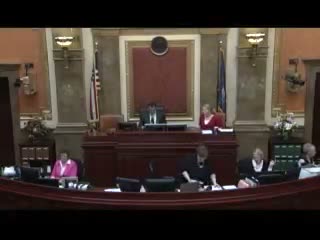
The House on March 14 passed Senate Bill 232, a package of adoption code revisions intended to protect putative fathers, clarify the effective date for notices filed with vital records and allow a pre-birth court order enabling an agency to hold a child pending completion of an adoption.
Representative Snow (presenting the bill) summarized changes prompted in part by a 2012 Supreme Court decision in which a father’s notice was not recorded in time, resulting in loss of parental rights; the bill makes the effective date the date the Office of Vital Records actually receives a notice rather than the date it is entered. The bill also creates narrowly defined implied-consent standards for certain fathers and allows a court to issue orders for pre-delivery custody where appropriate.
Members asked several questions about the standard of "emotional support" used in the bill as a potential ground for termination. Representative Wilcox asked whether a lack of emotional support over six months could be used to terminate rights and expressed discomfort with a vague standard. The sponsor responded that the implied-consent provision is not self-executing; a court must determine whether implied consent applies, the father must receive notice, and a hearing is required in most cases to determine the legality of terminating rights.
Representative Arrant asked whether the safe-haven (anonymous drop-off) law would be affected; the sponsor said the provision targeted abandonment by a father who had possession and that the current safe-haven law allowing anonymous drop-offs would remain intact and courts retain discretion to act in a child's best interest.
After extended questioning and clarifications that notice and court findings are required before rights are terminated, the House passed the bill; the clerk recorded 71 yay votes and 1 nay.