Get Full Government Meeting Transcripts, Videos, & Alerts Forever!
Get email alerts on the Economic Development topic
No spam. Unsubscribe anytime.
House rejects Salt Lake convention‑hotel tax‑rebate plan; SB 267 fails
Summary
The Utah House rejected Senate Bill 267, a proposal to rebated site‑specific state sales tax to support a privately financed Salt Lake convention hotel and adjacent expansion of convention space; proponents described a $33 million NPV cap and post‑performance structure, opponents warned of harm to existing hotels. The vote was 35‑39.
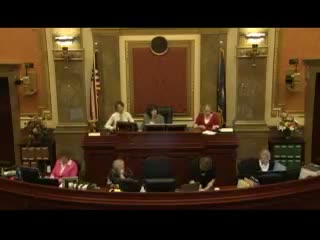
The Utah House voted down Senate Bill 267 on March 14, defeating a plan to rebate site‑specific state sales tax to support a privately financed convention hotel and expanded Salt Palace convention space. Voting closed 35 yes to 39 no, and the bill was filed.
Representative Wilson, the House sponsor, told colleagues the proposal is a post‑performance incentive tied to growth in convention demand and carries no direct taxpayer risk because the state pays the rebate only after new tax revenue is generated. "The state rebate will be capped at no greater than the $33,000,000 in net present value," Wilson said, adding the package pairs roughly 85,000 square feet of convention space with a privately owned hotel and anticipates long‑term tourism revenue growth.
Supporters argued the rebate is designed to expand the statewide tourism economy rather than merely shift business among local hotels. Representative Derek Brown said he initially opposed the idea but, after study, concluded it resembled prior post‑performance tools used to recruit major employers and does not transfer taxpayer risk to the private sector.
Opponents said the plan would simply reallocate existing business within the Salt Lake market and could damage long‑standing downtown hotels. Representative Pitcher, who declared a conflict of interest because he owns hotels elsewhere, urged the sponsor to consult area owners and warned of oversupply and receiverships in past local examples. Representative Green called the measure a form of government "picking winners and losers" and said it would forego tax revenue the state would otherwise collect.
Wilson said local governments must participate in the financing model and that the Governor's Office of Economic Development (GOED) had met with sponsors and expressed comfort with where the bill stood when presented. "We are losing millions and thousands of jobs because we do not have a convention space adequate enough to deal with the size of conventions that would like to come to Utah," he said, arguing for the proposal as a statewide, not merely local, economic development tool.
With debate cut off by a successful previous‑question motion, the House moved to a final vote. The bill failed, 35‑39.
What happens next: Because the measure failed on final passage in the House, it will not move forward in its current form. Sponsors and county and city officials who support the concept may pursue further study or negotiations in subsequent sessions or through local agreements; no further legislative action on SB 267 occurred that night.