Get Full Government Meeting Transcripts, Videos, & Alerts Forever!
Get email alerts on the Child Welfare topic
No spam. Unsubscribe anytime.
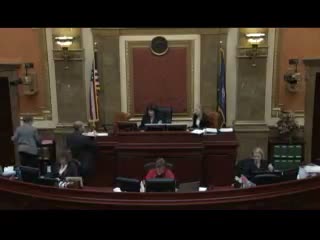
House passes DCFS overhaul to emphasize kinship placements and in‑home services amid floor concerns
Summary
The House passed SB 255, a sweeping package of child-welfare amendments that emphasizes kinship and guardianship placements, training changes, and a shift toward in-home services; opponents warned the bill risks de-prioritizing the best-interests-of-the-child standard and urged more committee vetting.
The Utah House approved Senate Bill 255 on March 12, 2013, advancing a multi-part set of child-welfare amendments proponents said were drawn from legislative audits and agency requests. Representative Ray, sponsor on the floor, told the chamber the bill enhances training for DCFS caseworkers and attorneys, prioritizes kinship placement and sibling-group preservation, and allows guardianship to be used as a permanency option when adoption is not available. The measure also tasks the Health and Human Services interim committee with further study and implementation planning.
Floor debate was extensive. Several members and the sponsor of an Office of Guardian ad Litem motion warned the bill represented a substantive policy shift being considered late in the session and sought clearer guardrails to preserve the primacy of a child’s best interest. Representative Nelson proposed a divided amendment to (1) delete the words 'policies and' in one provision and (2) add a clarifying phrase 'when considering the best interest of each child.' The floor considered the amendment in two parts; the first portion was rejected and the second portion (adding the best-interest language) failed on division, 28-41.
Supporters, including Representative Christiansen, framed SB 255 as the next logical step responding to a 2011 legislative audit that recommended more targeted approaches, more kinship placements, and better use of in-home services to keep children safely in families when possible. Proponents said use of guardianship has been low historically and that the bill reflects models used successfully in other states.
Opponents argued that shifting resources away from foster care and emphasizing indefinite guardianship could, in some cases, reduce efforts to establish permanent parent–child relationships for children who need them. Representative Westwood and others urged additional committee vetting before enacting major policy changes on the third-to-last day of session.
After debate and failed amendments, the House voted to pass SB 255; the floor record shows the bill passed 66-5. The sponsor and several members noted this legislation was supported by DCFS and courts at the operational level and that the statutory changes align with practice recommendations.
What’s next: SB 255 will be transmitted to the Senate for any remaining steps; members seeking details on implementation and scope asked staff to coordinate with DCFS and the Office of Guardian ad Litem during the interim.