Get Full Government Meeting Transcripts, Videos, & Alerts Forever!
Get email alerts on the Second Amendment Preservation topic
No spam. Unsubscribe anytime.
Utah House approves 'Second Amendment Preservation' bill after adding judicial-declaration safeguard
Summary
The Utah House passed the Second Substitute House Bill 114, a federalism-focused measure limiting enforcement of future federal statutes affecting firearms when two conditions are met; an amendment requiring a judicial declaration that a federal law conflicts with state law was added before final passage, 49–17.
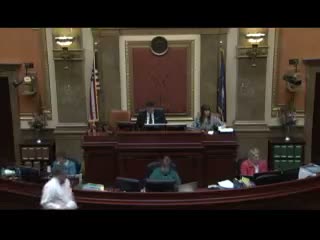
Salt Lake City — The Utah House passed the Second Substitute House Bill 114, described by sponsor Representative Green as a federalism measure that seeks to limit state cooperation with future federal statutes it views as infringing fundamental rights. The chamber adopted an amendment requiring that prohibitions apply only to federal statutes that have been judicially declared to conflict with state law, and the bill then passed 49–17.
Representative Green, the bill sponsor, told colleagues the measure was not intended as nullification or an attack on federal government authority but as a proactive step to ‘‘reaffirm the primacy of state law’’ over areas of public health and safety traditionally governed by states. Green said the bill targets ‘‘future federal statute[s] . . . that have the effect or the intent of confiscating or banning firearms’’ and other actions the sponsor characterized as encroachments on state jurisdiction.
Representative Powell successfully moved an amendment to require that the prohibitions apply only where a federal statute has been judicially declared to conflict with state law. Powell said the insertion reduces the risk of ‘‘dueling peace officers’’ and of on‑the‑scene law‑enforcement officers making ad‑hoc determinations about conflicts between state and federal law. The House adopted the amendment by division (39 yea, 25 nay) before final passage of the bill.
Opponents, including Representative Arendt and Representative King, argued the bill poses serious constitutional problems. Representative Arendt cited the legislature’s constitutional counsel, saying legal analysis showed a ‘‘high probability that a court will find that this bill violates the supremacy and commerce clauses’’ to the extent it conflicts with federal firearms law. Representative King urged fidelity to constitutional doctrine and warned against elevating ‘‘amorphous’’ language (such as ‘‘inalienable rights’’) over established constitutional analysis.
Supporters framed the bill as a state‑level tool to resist federal overreach. Representative Christiansen and others cited historical and Supreme Court language about state police powers and federalism, and stressed that the bill removes criminal penalties and does not authorize state officers to arrest federal agents.
After extended floor debate and the amendment’s adoption, the House voted to pass the second substitute H.B. 114, 49–17. The bill will be transmitted to the Utah Senate for its consideration.
What happens next: The bill now moves to the Senate calendar. If the Senate takes up the bill and approves it, the file would return to the House for final enrollment and then to the governor. Opponents noted the likelihood of judicial review if the law were enacted and implemented.