Get Full Government Meeting Transcripts, Videos, & Alerts Forever!
Get email alerts on the Land Use Policy topic
No spam. Unsubscribe anytime.
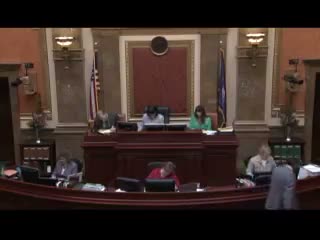
House approves resolution rejecting Agenda 21 after heated debate
Summary
The House passed a joint resolution rejecting the United Nations' Agenda 21 following an extended floor debate about sustainable development, local control, and implications for cities and counties.
The Utah House on March 6 passed a joint resolution rejecting United Nations' Agenda 21 principles after an extended and sometimes contentious floor debate.
Representative Roberts, the sponsor, framed the measure as a rejection of Agenda 21 and a defense of private property rights and local control. He described Agenda 21 as a soft‑law international plan promoting sustainable development and urged members to vote in favor, citing other states’ actions and national political context.
Opponents said the resolution is overly broad and risks penalizing local planning partnerships. Representative Powell said he dislikes resolutions that lack clear legislative action and urged caution about sweeping language that could affect cities and counties which are members of international local-environment initiatives. Representative Hemingway and others warned that the resolution could work against sustainable economic development efforts in Utah.
Proponents and opponents quoted sections of Agenda 21 and debated whether the resolution would prevent local governments from engaging in cooperative planning. Representative Ivory read from Agenda 21 to argue that the plan supports communal land-use approaches, which he said Utah should resist.
After debate, the House adopted first substitute SJR 11 on a roll call, 44‑28. Sponsors said the resolution aims to protect private-property rights and due process and urged passage.
Next steps: the resolution will be returned to the Senate for consideration.