Get Full Government Meeting Transcripts, Videos, & Alerts Forever!
Get email alerts on the Corrections topic
No spam. Unsubscribe anytime.
House passes resolution urging state to include county jails in planning for prison placement, emphasizes treatment and recidivism reduction
Summary
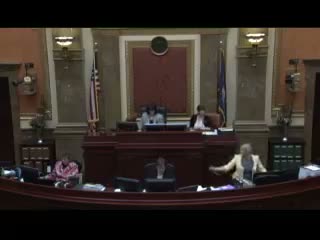
First substitute HCR 5 passed the House March 5, 2013, urging that counties be included in planning for prisoner placement and emphasizing treatment and education programs in county jails as tools to reduce recidivism; vote recorded 73–0.
The House approved a nonbinding concurrent resolution March 5 inviting continued partnership between the state and county jails as officials consider relocation and replacement of the Draper prison.
Representative Noel (sponsor) told the chamber the resolution recognizes that counties currently house roughly 1,700 inmates across about 20 county facilities and that many county-run programs (education, drug and alcohol treatment) can reduce recidivism. He cited floor statements that participation in education programs while incarcerated reduces the likelihood of reoffending by approximately 20 percent and referred to a Utah Department of Human Services figure — cited on the floor — of a 32 percent reduction in reoffense likelihood for individuals receiving regular mental-health or substance-abuse treatment.
Noel emphasized the resolution is not directive: it does not require the governor or the Department of Corrections to place prisoners in county jails or set quotas. He framed the resolution as a call to ensure counties and county correctional facilities are included in planning and discussions as the state explores options for a new facility and prisoner placements.
Floor debate included many members from both urban and rural districts. Supporters argued county capacity and involvement can bring cost savings and better programming; some speakers stressed that maximum-security prisoners are not appropriate for county jails and that medium-security placements and appropriate programming are the intent. Representative Wilson offered and the House accepted an amendment deleting prescriptive language (lines 95–98) that had been viewed as overly detailed about construction expectations.
After amendment and further floor discussion about transportation costs and technological options such as remote hearings and video visitation, the House voted to pass the first substitute HCR 5 by a recorded vote of 73 yes, 0 no. The resolution will be transmitted to the Senate.