Get Full Government Meeting Transcripts, Videos, & Alerts Forever!
Get email alerts on the Fire Code topic
No spam. Unsubscribe anytime.
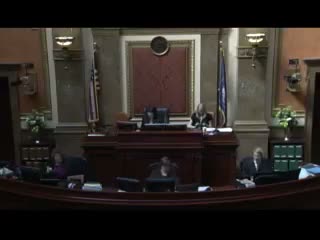
House adopts revised state fire code after close floor fight over rural exemptions
Summary
Lawmakers approved first substitute House Bill 217 to update Utah’s state fire code; an amendment allowing some localities to enact less restrictive local ordinances passed 40-33 amid floor debate about statewide consistency and rural flexibility; final passage was 65-8.
Representative Dunnigan, sponsor of House Bill 217, told the House the measure chiefly consolidates existing fire-code provisions, clarifies where standpipe systems are required in parking garages, defines dimensions for fire pump and sprinkler riser rooms, and adds carbon-monoxide provisions to make fire and building codes consistent. He said the bill was vetted by the state fire prevention board and the uniform building code commission and aimed to make the code easier to interpret and apply in Utah.
Representative Noel, representing a largely rural district, offered an amendment (Amendment 1) to allow a local legislative body to "enact an ordinance that is less restrictive than the state fire code adopted under Title 5A" for certain jurisdictions. Noel described several rural examples — including an all-metal arena in Orderville that would have been constrained by the code — and argued that local elected officials should have authority to adopt less restrictive measures suitable for sparse, volunteer-fire-department communities.
The sponsor and several members pushed back in floor debate, arguing the amendment risks inconsistent codes across jurisdictions and would undercut the purpose of having a statewide standard; they urged local officials to pursue appeals or interim review processes instead of a statutory carve-out. Representative Wylie and others explained the code-change process and said national model codes are adopted and adapted through a public process.
After extensive debate and a motion to cut off further debate, the House voted to adopt Amendment 1, 40 yes to 33 no. With the amendment in place, the House later voted to pass the first substitute House Bill 217 by a margin of 65 yes to 8 no; the bill will be transmitted to the Senate for consideration.
The floor record shows the bill’s sponsor and the state fire marshal engaged county officials during the interim, and sponsors repeatedly emphasized that local appeal mechanisms and review by the fire prevention board remain available.
The House’s action leaves intact key statewide fire-safety updates while creating a statutory avenue, as amended, for some local flexibility that supporters said would relieve burdens in rural counties.