Get Full Government Meeting Transcripts, Videos, & Alerts Forever!
Get email alerts on the Transportation Safety topic
No spam. Unsubscribe anytime.
House approves HB 316 creating affirmative defense for cyclists and motorcyclists at undetecting signals
Summary
HB 316 adds an affirmative defense for a motorcyclist or bicyclist cited at a red signal that fails to detect them, provided the intersection is clear; supporters said sensors often miss smaller vehicles. The House passed the bill 43‑29.
The Utah House passed House Bill 316 on March 1, establishing an affirmative defense for a motorcyclist, moped operator, or bicyclist who proceeds through a red light or red arrow when detection sensors fail to register their presence and the intersection is otherwise clear.
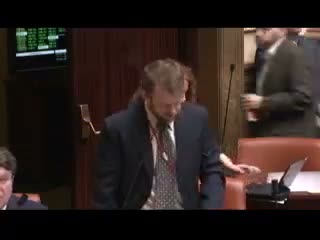
Sponsor Representative Johnny Anderson explained that many sensors do not detect bicycles or motorcycles and described common scenarios that trap such road users at intersections. “When a cyclist or a motorcyclist encounters these and the lights are not timed or other vehicles are not present to trip the sensors, the cyclist or motorcyclist is stuck in that position with no legal option,” Anderson said. The bill would allow a person cited under those conditions to present in court that they waited and made sure the intersection was clear as an affirmative defense.
Lawmakers asked about liability and burden of proof if a collision occurs. Representative Ray asked, “Where's the liability at as a driver? Somebody goes through that and I run into them. What is my liability?” Representative Anderson replied that the cyclist or motorcyclist must ensure the intersection is completely clear and that failing to do so would mean they broke the law.
Supporters, including several members who ride motorcycles, described the change as a practical safety fix; Representative Wiley, identifying as a motorcycle rider, said long waits at signals can be dangerous and applauded the measure. The sponsor said other states have adopted similar laws and reported no notable negative effects.
After floor debate, the House passed HB 316 by a roll call vote of 43 yes to 29 no. The bill will be transmitted to the Senate.