Get Full Government Meeting Transcripts, Videos, & Alerts Forever!
Get email alerts on the Criminal Justice topic
No spam. Unsubscribe anytime.
House adopts disorderly-conduct amendments to clarify when visible firearms may prompt police action
Summary
House Bill 268, amended on the floor, clarifies that mere possession of a holstered or encased firearm does not itself constitute disorderly conduct absent threatening behavior; sponsors said the changes give law enforcement tools to address open display or brandishing of weapons while protecting lawful carriers.
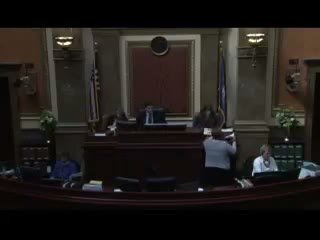
The Utah House adopted first substitute House Bill 268 on Wednesday, approving floor amendments that clarify when police may cite someone for disorderly conduct related to firearms.
Sponsor Representative Paul Ray described the bill as aimed at two goals: protecting people lawfully carrying holstered or encased firearms from disorderly conduct citations while giving law enforcement authority to address threatening or disruptive public displays (for example, an assault rifle strapped over a shoulder inside a mall). Ray said the measure does not change open‑carry rules but provides clearer lines for disorderly‑conduct enforcement.
Representative Brown proposed and the House adopted amendment number 2 (floor amendment dated Feb. 27), which reintroduced a "reasonable person" standard and clarified behavioral triggers that could justify enforcement. Ray said the amendment was a "friendly amendment" that improved the bill’s balance between Second Amendment rights and law-enforcement needs.
Floor questioners raised scenarios involving officers’ discretion, public comfort, and whether the statute would limit police interactions. Ray and other supporters said the bill preserves Fourth Amendment protections (no stop without probable cause) while giving law enforcement the authority to approach and investigate clearly threatening behavior. Opponents urged caution, saying the bill could diminish public comfort around visible firearms and constrain officer discretion.
The House passed the bill 54–12; it will be transmitted to the Senate for further consideration.