Get Full Government Meeting Transcripts, Videos, & Alerts Forever!
Get email alerts on the Public Lands topic
No spam. Unsubscribe anytime.
Utah House approves broad PLIPCO public-lands study amid debate over costs and litigation
Summary
House Bill 142 authorizes a detailed, multi-year study through the Public Lands Policy Coordinating Office (PLIPCO) to inventory federal lands, estimate costs and revenues, and evaluate management options. The House passed HB 142 68–1 after an extended floor debate over fiscal impact and litigation risk.
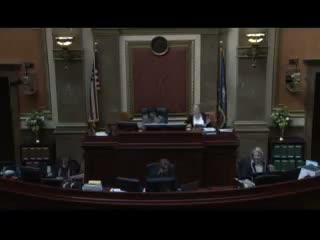
The Utah House on Feb. 27 approved House Bill 142, authorizing an expanded, multi-year study by the Public Lands Policy Coordinating Office (PLIPCO) to inventory federal public lands and assess options for state management or transfer.
Representative Barris, sponsor of HB 142, told the chamber the bill tasks PLIPCO with an in-depth inventory and economic analysis: identify ownership, management, deferred-maintenance costs, existing rights and leases, and to recommend processes for any potential transfer or change in management. "If you take a look at this, and I'm not gonna go through it in detail... there—s a whole group of things that we really need to look at as far as the inventory in the lands," Barris said, asking for robust, public input and multi-year study work.
Lawmakers questioned scope and potential costs. Representative King asked whether the bill requires a comprehensive review of costs and available state resources; Barris said it does and that the study must address potential revenue changes (including PILT and mineral royalties), indemnification for counties, and other fiscal factors. Representative Nelson urged an inventory-first approach—identify parcels the state might manage better and consider exchanges or other nonlitigation pathways. Representative Ivory and others highlighted that several Western states are pursuing similar measures and that local governments have passed supportive resolutions.
Opponents or cautious voices raised litigation concerns tied to companion measures. Representative Nelson and others said there is no clear legal precedent for an outright demand that the federal government transfer lands and urged negotiations, exchanges and careful fiscal planning before pursuing litigation. Representative Noel argued the state has entered litigation in some cases and that exchanges historically have been limited.
The House voted to pass HB 142, 68–1. The sponsor and backers described the bill as a planning and information-gathering step meant to inform future policy decisions.
Why it matters: HB 142 creates a formal, state-funded process to inventory and analyze federal public lands in Utah and to evaluate whether, and under what terms, state management or transfer would be feasible. That groundwork could underpin later legislative or legal actions and affects counties, federal agencies, recreation and resource-dependent industries.
Next steps: HB 142 was passed by the House and will be transmitted to the Senate for its consideration.