Get Full Government Meeting Transcripts, Videos, & Alerts Forever!
Get email alerts on the Building Code topic
No spam. Unsubscribe anytime.
House rejects rural-code amendment and advances construction-code updates
Summary
Lawmakers debated HB310 and rejected Amendment No. 4 that would have allowed less-restrictive local ordinances in some rural counties; sponsors argued uniform state codes protect safety, and the underlying building-code bill passed 54-16.
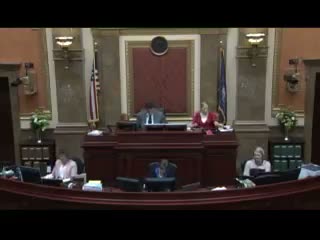
The Utah House considered House Bill 310, which adopts portions of the 2012 Uniform Building Code with Utah-specific amendments, and debated a floor amendment that would have allowed certain rural counties to enact less restrictive ordinances in unincorporated areas.
Representative Noel moved Amendment No. 4 to permit county legislative bodies in fourth- through sixth-class counties to adopt local ordinances less restrictive than state construction code for unique local circumstances. Noel said the change would help sparsely populated counties where only a few homes are built annually and where local needs may differ.
Sponsor Representative Wilson and other supporters of uniformity opposed the amendment, arguing the state adopted a uniform building code to ensure safety and consistent practice across jurisdictions. Wilson said reverting to fragmented local codes would recreate past chaos. After a division vote the amendment failed, receiving 20 votes in favor and 49 opposed.
Representative Wilson emphasized the bills are intended to protect safety, coordinate with fire codes and provide clarity on load tables and facility-specific issues. House Bill 310 passed on a recorded vote, 54 "yay" to 16 "nay," and will be transmitted to the Senate.
The floor exchanges highlighted tension between local control advocates and proponents of statewide uniformity; no amendment changing statewide adoption carried on the floor.