Get Full Government Meeting Transcripts, Videos, & Alerts Forever!
Get email alerts on the Education Concurrent Enrollment topic
No spam. Unsubscribe anytime.
House keeps concurrent-enrollment credits but formalizes reduced fees for eligible students
Summary
House passes SB 162 to clarify payments and reduced tuition for concurrent-enrollment college credit; sponsor said baseline is $15 per credit with reduced rates for eligible students; vote 69-1.
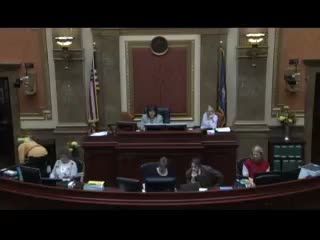
The Utah House on Feb. 21 passed Senate Bill 162, a measure clarifying how students pay for concurrent-enrollment courses that provide college credit while in high school.
Representative Ipsen, the House sponsor, said the bill corrects implementation issues from last year and clarifies how higher-education institutions will charge for technically intensive courses. "This bill simply corrects that, talks about how they're going to charge for courses like technical intensive courses that require extended technology to support it," Ipsen said.
Floor questions focused on whether the change would reintroduce fees for students who previously received concurrent courses free of charge. Representative Tanner warned that charging could deter participation among low-income families. Ipsen and other supporters said the program already charges in practice and that the bill formalizes a reduced-rate structure to preserve access.
Representative Gibson cited the committee record and described the rate structure, saying the bottom-line cost is about $15 per credit hour for college-credit enrollment and called it a bargain compared with standard tuition. Representative Ipsen stated the reduced rate for eligible students could be as low as $5 per credit hour.
Backers said the change is a compromise necessary to maintain concurrent enrollment offerings facing reduced higher-education funding; critics voiced access concerns but acknowledged provisions for free or reduced lunch recipients. The House passed SB 162, 69 to 1. The bill will be returned to the Senate for further consideration.
The final vote and the bill text detail fee tiers and eligibility rules; sponsors said colleges will continue to offer a free-auditing option for students who do not seek college credit.