Get Full Government Meeting Transcripts, Videos, & Alerts Forever!
Get email alerts on the Aed And Cpr topic
No spam. Unsubscribe anytime.
Utah House advances AED funding and registration; school CPR bill fails
Summary
Lawmakers passed two bills to tighten AED registration, add tampering penalties and create a restricted account to buy and prioritize AEDs for schools and first responders, while a separate measure to reinstate statewide in-class CPR training failed on the floor.
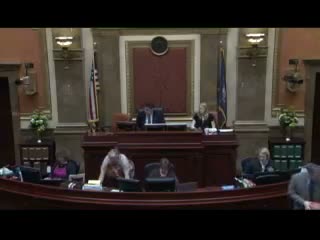
The Utah House on Feb. 25 approved two measures aimed at expanding use and oversight of automated external defibrillators and updating emergency-response procedures, but rejected a proposal to restore statewide, school-based CPR instruction.
Representative Cunningham led floor debate on House Bill 116, which shortens the AED registration window from 30 days to 14, clarifies web-based registration and adds tampering penalties and dispatcher instructions. Representative Tanner successfully moved an amendment that reduced the tampering offense from a class B to a class C misdemeanor; Cunningham said the sponsor had no objection. The amended HB 116 passed 69–0 and will be transmitted to the Senate.
Later the House moved up and passed Second Substitute House Bill 118, which creates a restricted account to fund placement of AEDs in schools (grades 7–12), municipal and county law enforcement and institutions of higher education. Cunningham described grant-matching requirements for municipalities and prioritized placement; the bill passed 71–1.
Representative Moss had introduced House Bill 307 to reinstate hands-on CPR and AED training in high-school health classes and to provide funding for mannequins and professional trainers. Moss argued the program previously trained large numbers of students and said, “we have over 6,000 cases in Utah of cardiac arrest and only 7 percent of these folks survive because they have immediate response through CPR…so I think it's really critical that students…learn this.” Opponents said the proposal would effectively mandate curriculum and that districts can already choose to teach CPR; Representative Liffert said he supported CPR instruction but opposed this method of imposing it. On third reading HB 307 failed 29–38.
The votes leave the state with stricter AED reporting rules and a funding mechanism for devices, while the school-CPR reinstatement will not proceed this session unless revived by appropriations or another vehicle.
The next procedural step for HB 116 and HB 118 is transmission to the Senate; HB 307 was referred to staff for filing after the failed floor vote.