Get Full Government Meeting Transcripts, Videos, & Alerts Forever!
Get email alerts on the Severance Tax topic
No spam. Unsubscribe anytime.
Severance-tax phase-in statute fails after heated floor debate
Summary
A bill intended to statutorily phase in voter-approved Amendment A's severance‑tax investment formula (HB 63) failed in the House after extended debate over a proposed $8.25 million initial deposit and implications for the general fund.
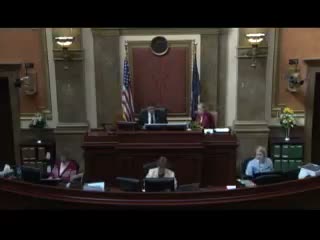
Lawmakers on Feb. 1 debated HB 63, a statutory measure proposed by Representative Grant Nielsen to phase in the implementation of Amendment A (the voter-approved severance-tax investment formula). Nielsen told the chamber the statute was intended to provide an orderly transition in implementing the constitutional amendment and described phased contribution amounts for fiscal years 2014–2016.
Representative Nielsen said: "If we were applying Amendment A to fiscal year 2014... that amendment would require that we put $33,000,000 into the permanent state trust fund... For 2014... a quarter of what Amendment A would require will go into the permanent state trust fund. That's $8,250,000." He and backers argued a phase-in belonged in statute rather than in the constitution.
Opponents raised budgetary concerns. Representatives asked whether subtracting $8.25 million from consensus revenue estimates had been accounted for and warned that many appropriations committees were already searching for funds; several members urged fiscal caution. Representative Briscoe and others emphasized the drain on near-term available revenue and the potential for appropriation pressure across committees.
After questions and summations, the House voted 35–38 and the bill failed. The Clerk recorded the bill as returned to staff for filing. The vote leaves the timing of Amendment A's implementation to future legislative action and reinforces point-of-sale tensions between near-term appropriations demands and long-term savings objectives.
What’s next: Sponsors may revisit statutory mechanics in future sessions; the constitutional amendment remains in effect but statutory details for phased implementation were not adopted by this chamber.