Get Full Government Meeting Transcripts, Videos, & Alerts Forever!
Get email alerts on the National Parks Funding topic
No spam. Unsubscribe anytime.
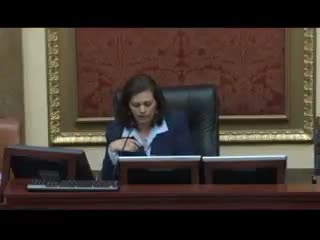
Utah House approves emergency funding to reopen national parks amid federal shutdown
Summary
The Utah House on Oct. 16, 2013, approved First Substitute Senate Bill 2,001 to provide roughly $1.7 million in immediate funds and about $6.9 million in ongoing money through Dec. 2 to reopen national parks and federal sites; the bill passed 67-0.
SALT LAKE CITY — The Utah House of Representatives voted unanimously Oct. 16 to advance short-term state funding to reopen national parks and other federal sites affected by the federal government shutdown.
First Substitute Senate Bill 2,001, transmitted from the Senate and sponsored in the House by Representative Ipsen, directs roughly $1,700,000 in immediate assistance and about $6,900,000 in additional funds to cover operations through Dec. 2. The sponsor told colleagues the payments would be made “on a weekly basis as needed” and that the money would be drawn from a surplus in the State Sovereign Lands Management Account. Any amounts later reimbursed by the federal government, Ipsen said, would be returned to that account.
“We’re open today, we’ll be open tomorrow, and we will be open next year when you wanna come again,” Representative Ipsen said in summation, praising staff and executive-branch partners for arranging the logistics needed to keep parks and tourism businesses operating.
Supporters framed the measure as an urgent economic response for gateway communities that depend on tourists. Representative Stannard said revenue from lost tourism quickly emptied hotel rooms and shops near Zion National Park, estimating the effect at about $30 million of economic activity to local businesses. Representative Lifford said Utah’s national parks are central to the state’s identity and economy and urged members to protect them with available state resources.
Lawmakers acknowledged a financial risk: the state has no guaranteed, binding federal commitment to repay these outlays. When asked about reimbursement, Ipsen said the expenditures are “strictly an investment on our part and good faith that they will give it back to us” and noted bills to reimburse states had been filed in Congress but were not binding.
Representative Christiansen asked that a statement of legislative intent be placed in the House Journal to record the state’s position that it advances funds “in good faith reliance and expectation of full and prompt repayment” and that doing so does not waive Utah’s sovereign rights. The House voted to spread that language on the journal.
Debate included sharply different framings of the federal shutdown. Representative Ivory described widespread local disruptions and urged a robust state response; Representative King warned against language that portrays the federal government as uniformly at fault, calling the shutdown the result of obstruction by a small group. Representative Chavez Houck pressed the sponsor on performance measures and return-on-investment benchmarks; Ipsen said evaluation of those measures falls to the executive branch and the Department of Parks and Recreation.
The clerk reported the final vote as 67 yes, 0 no; the bill passed the House by more than two-thirds and was signed by the speaker to be returned to the Senate for the president’s signature. Following related procedural items and the appointment of members to notify the governor and Senate, the House adjourned sine die.
Actions recorded by the House indicate the money will be drawn from state accounts that the sponsor said would be replenished if federal reimbursement arrives, but lawmakers and staff acknowledged that reimbursement is not guaranteed and depends on future federal action.