Get Full Government Meeting Transcripts, Videos, & Alerts Forever!
Get email alerts on the Criminal Justice Enticement topic
No spam. Unsubscribe anytime.
Utah House approves tighter wording on 'enticement of a minor' after extended debate
Summary
After extended floor debate over whether removing an 'intent' requirement would criminalize ambiguous online communication, the Utah House passed HB 31 to clarify enticement statutes for electronic communications, 58–16. Supporters said the change restores the statute's original reach; opponents warned of possible overbreadth.
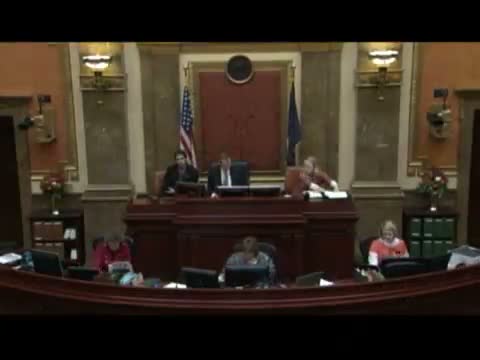
The Utah House on Jan. 30 passed House Bill 31, which revises statutory language on the crime of "enticement of a minor" to make prosecutions for electronic enticement clearer and easier to pursue. The bill passed 58 yeas to 16 nays after more than an hour of floor questions and debate.
Sponsor Representative Webb told colleagues the measure primarily removes an 'intent' formulation that had created uncertainty in prosecutions, saying the offense "has always been" part of the code and the change is intended to restore clarity for law enforcement and courts. "This is not a new statute," Webb said, urging members not to conflate the clarification with expansion.
Opponents and questioners pressed the sponsor repeatedly on practical effects and standards of culpability. Representative Hutchings asked how "entice" would be defined in cases where communication between minors (or between an 18‑year‑old and a 17‑year‑old) might appear suggestive but not criminal. Representative King and Representative Greenwood emphasized that determinations often require courts to review the totality of circumstances and that removing an explicit "intent" phrase could broaden prosecutorial reach. "Enticing, according to Webster, is something made attractive," Greenwood said, arguing that courts must retain flexibility to distinguish innocent from criminal conduct.
Several members said the bill was vetted in committee and that drafters consulted with civil liberties stakeholders. Representative Webb said discussions had included the ACLU and that the authors took care not to unintentionally criminalize ordinary communications.
After debate, the House voted in favor of HB 31. The bill will move to the Utah Senate for consideration.
What happens next: HB 31 now proceeds to the Senate. The House record shows the final vote count (58 yeas, 16 nays); the text as amended clarifies definitions and shifts some language from the penalty section into the substantive part of the offense. The bill sponsor said further legal questions may ultimately be resolved in court if the statute is applied in disputed cases.