Get Full Government Meeting Transcripts, Videos, & Alerts Forever!
Get email alerts on the Ethics Transparency topic
No spam. Unsubscribe anytime.
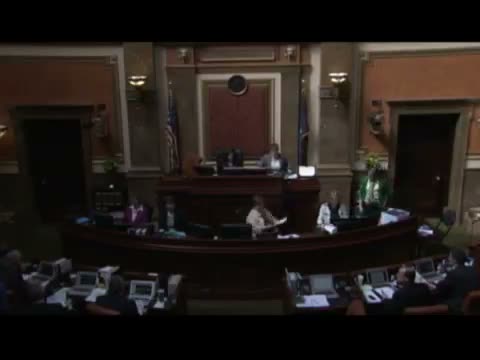
Utah House returns lobbyist‑disclosure bill to Senate after contentious floor fight
Summary
After hours of amendment and debate on donated‑time reporting and the scope of who must disclose, third substitute S.B. 97 (lobbyist disclosure) failed a final roll call (35–37) on March 13, 2014 and was returned to the Senate for filing.
The House took up third substitute S.B. 97 on March 13, a lobbyist‑disclosure and regulation bill that drew extended debate over donated‑time reporting, definitions of "lobbyist" and whether the new rules should apply to midterm special‑election delegates. Sponsor Representative Noel pressed for broader disclosure to avoid "dark consulting" and urged transparency: "All we're doing is we're providing them a mechanism where there's transparency."
Amendment 3 (dated March 13) was offered and adopted to clarify that citizens acting in their personal capacity (not acting as a lobbyist on behalf of a principal) retain the right to participate without reporting. Several members warned the donated‑time reporting requirement could be gamed and produce unintended consequences; Representative McKay moved to strike donated‑time language but that motion failed on the roll. Representative Snow and others supported the amendment clarifying civilian participation, and Representative Brown and others voiced opposition to expanding coverage specifically for midterm vacancies.
After amendments and several close procedural votes, the final roll call on the third substitute read 35 yes, 37 no; the bill failed to pass on the floor and will be returned to the Senate for filing. Floor debate recorded substantive disagreement about whether the measure appropriately balances transparency with free‑speech and candidate‑selection norms in the delegate system.