Get Full Government Meeting Transcripts, Videos, & Alerts Forever!
Get email alerts on the Education Funding topic
No spam. Unsubscribe anytime.
House passes bill requiring school districts to fund promised post-employment health benefits
Summary
The House approved House Bill 423 on March 10, 2014, requiring school districts to address unfunded OPEB liabilities and to begin paying the actuary-required contribution (ARC) within a 20-year plan absent narrow exceptions; the measure passed 57–15 and moves to the Senate.
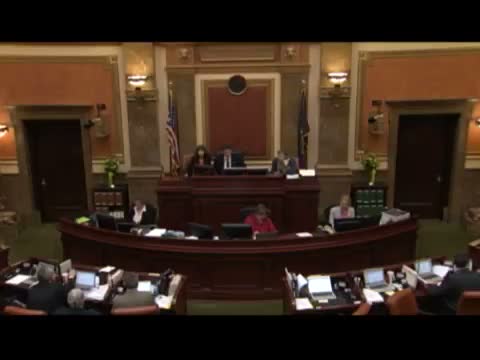
The Utah House of Representatives on March 10 approved House Bill 423, a measure directed at school-district post-employment health insurance obligations, by a vote of 57 yea to 15 nay. Representative Eliason, the bill sponsor, said a fiscal analysis found roughly "a quarter billion of unfunded liabilities" across districts and that the bill would require districts with open OPEB plans that are not fully funded to close enrollment to new participants until the obligations to current participants are funded.
Why it matters: The legislation seeks to protect benefits already promised to retirees by forcing districts to begin adhering to an actuary-required contribution schedule. According to Representative Eliason, the bill also requires OPEB plans—open or closed—to begin funding on the ARC, with two narrow exceptions: when the Legislature funds WPU growth at 0% or when a local board has already maxed out the local levy.
Key points and debate: Representative Eliason told the chamber that the fiscal analyst, Ben Leishman, had reviewed audited financial statements across districts to estimate the unfunded liability. "There's approximately a quarter billion of unfunded liabilities existing in school districts for these programs," Eliason said. Representative Briscoe asked why the bill sets a 20-year amortization window rather than the 30-year maximum cited by GASB; Eliason replied that 20 years was chosen as a compromise to accelerate funding and avoid waiting the full 30-year period.
The House approved the bill, which its sponsor described as "a good fiscal responsibility" to keep promises made to employees. The measure will be transmitted to the Senate for further consideration.
Next steps: The bill will proceed to the Senate for consideration; the transcript does not record any Senate action on the measure during this session.