Get Full Government Meeting Transcripts, Videos, & Alerts Forever!
Get email alerts on the Incinerator Siting topic
No spam. Unsubscribe anytime.
House approves buffer for new medical‑waste incinerators after hours of debate
Summary
First substitute Senate Bill 196 passed the House 44–28. The law requires initial siting of new incinerators handling infectious waste or chemotherapeutic agents to provide a two‑mile radius from residential zones (grandfathering existing facilities); lawmakers raised concerns about property effects and whether the law targets a specific company (Stericycle).
The Utah House passed first substitute Senate Bill 196 on March 11, 2014, a narrowly targeted measure setting siting requirements for new medical‑waste incinerators that handle infectious waste or chemotherapeutic agents. The bill requires that, at initial siting after Jan. 1, 2014, a new facility be located so that a two‑mile radius does not include residentially zoned land; existing facilities are grandfathered.
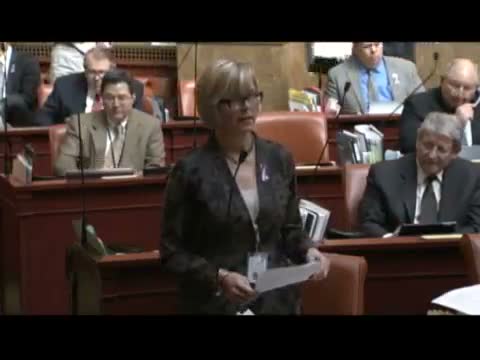
Representative Edwards, sponsor of the floor presentation, said the provision is intended only for initial siting and does not prevent municipalities from changing zoning later. In committee and on the floor, members questioned how the two‑mile buffer would be implemented — whether the operator must purchase land within the buffer, obtain easements, or rely on municipal zoning — and whether it effectively creates land‑use restrictions for third parties. Edwards replied the buffer was developed with industry input, is not intended to require purchase of all land within the radius, and leaves local zoning authority intact after a permit is issued.
Several members voiced concern the statute could be perceived as targeted at a specific company. Representative Arendt noted residents in a proposed relocation area had expressed fear and wanted stronger protections; Representative Oda, who has experience with air‑quality issues, urged caution about a two‑mile requirement absent clear technical necessity. Representative Sager defended the bill as reasonable and said the dioxin risk was overstated in public meetings. Supporters said the bill aims to protect residents around initial sitings while preserving necessary services for the state.
Representative Edwards said the state already regulates siting and that HJR6 (passed earlier) provides required legislative approval for any new state facility. The House voted 44–28 in favor. Sponsor and several members emphasized the bill’s narrow scope and that it applies only to new facilities, not to existing incinerators.