Get Full Government Meeting Transcripts, Videos, & Alerts Forever!
Get email alerts on the Education Assessment topic
No spam. Unsubscribe anytime.
House amends school-grading law to account for computer-adaptive testing and ACT benchmarks
Summary
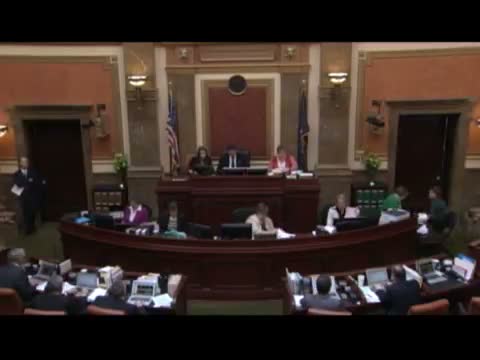
Senate Bill 209, a set of amendments to school-grading statutes that add flexibility for computer-adaptive testing base-year measures, exempt alternative schools from the grading matrix, and reference ACT college-readiness benchmarks, passed the House 62-12 after extended debate.
Senate Bill 209, a complex package of amendments to Utah’s school-grading statute, passed the Utah House 62-12 after extended floor debate about methodology, fairness and consequences for schools serving special-needs and at-risk populations.
Representative Hughes presented an amendment adopting flexibility for the state board of education in the first year of computer-adaptive testing, allowing the board to use a base year and not require scale-score alignment between the two assessment systems immediately. He said the amendment responds to technical challenges in aligning new adaptive tests with previous-year assessments and gives the State Board time to adjust reporting (for example, delaying public posting of grades until Dec. 15, 2014).
Sponsors also said the amendment would soften penalties tied to test-participation thresholds that in one case produced a one-letter-grade drop for a school that missed a participation threshold. Alternative schools were explicitly exempted from the grading matrix and would instead use an accountability plan. The amendment referenced use of ACT research group benchmarks for college readiness rather than a single numeric cutoff, removing an explicit '18' figure from statute and instead pointing to ACT-defined benchmarks.
Opponents argued school grading is a blunt instrument that may not fairly reflect the work of schools, particularly given socioeconomic differences, variation in IEPs for special-needs students and the transition between testing systems. Several members urged continued stakeholder engagement and suggested a report-card or dashboard approach as alternatives to a single letter grade.
After debate and summations emphasizing the value of better data for policymakers and the need to use results to improve schools, the clerk reported the vote: SB 209 passed the House 62-12 and will be transmitted to the Senate for further consideration.