Get Full Government Meeting Transcripts, Videos, & Alerts Forever!
Get email alerts on the Privacy Alpr topic
No spam. Unsubscribe anytime.
House approves bill curbing law-enforcement use of private license-plate databases
Summary
The House passed Senate Bill 222 to limit law-enforcement access to automatic license-plate reader (ALPR) data held by private vendors to 30 days of historical records; sponsors said the measure closes a loophole while critics urged more discussion about privacy and retention limits.
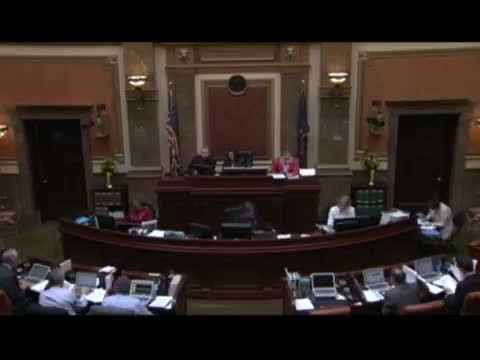
The Utah House on March 11 approved Senate Bill 222, a measure that narrows how law enforcement may use automatic license-plate reader (ALPR) data collected and stored by private companies. Sponsor Representative McKay said the bill "will close that loophole" allowing private firms to retain long-term plate data and then provide it to police, and that "the minute that they go to sell it or do it or use it for law enforcement purposes, they will only be able to use 30 days worth of data backwards."
The bill, which the sponsor described as harmonizing last year’s policy, drew questions from colleagues about who operates ALPR cameras and why private retention presents a problem. Representative Red asked, "who's in charge of collecting the license plate information and why do we do it in the first place?" McKay replied that the technology is used in multiple contexts—by law enforcement to find suspects and in AMBER alert situations, and commercially by repossession companies and data vendors. He said both governmental agencies and private vendors operate the systems and that the bill targets cooperation between private vendors and police, not private commercial uses alone.
Representative Tanner pressed whether 30 days was sufficient for criminal investigations, suggesting a year might be more appropriate. McKay framed the choice as a civil-liberties tradeoff and defended the 30-day limit as the balance struck in prior negotiations: "the question really here is... what balance do we want to allow law enforcement to track and use data about where we are."
Members also sought clarification about an existing statutory preservation period for government-collected data; Representative Powell noted a provision allowing governmental entities to preserve data for nine months, and McKay confirmed the bill’s restriction is aimed at private providers when they cooperate with law enforcement.
The House recorded the bill’s passage on the floor and directed it to be signed by the Speaker and returned to the Senate. The legislative text and implementation details—such as audit or oversight mechanisms for vendor queries—were discussed but not resolved on the floor.