Get Full Government Meeting Transcripts, Videos, & Alerts Forever!
Get email alerts on the Education topic
No spam. Unsubscribe anytime.
House passes education-sovereignty bill after debate over federal waivers
Summary
The Utah House passed the State Educational Sovereignty Act (HB425), which gives the State Board of Education authority to adjust Weighted Pupil Unit (WPU) allocations for districts accepting certain federal funds without state approval; the measure passed 42–31 after floor debate about federal overreach and local district funding needs.
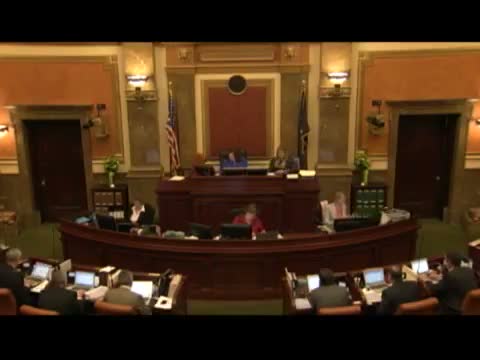
The Utah House of Representatives on March 10 passed House Bill 425, the State Educational Sovereignty Act, following a floor debate about whether the U.S. Department of Education was circumventing state authority. Representative Eliason, sponsor of the bill, said the measure responds to a letter from Congressman Rob Bishop and to federal actions that he described as “an overreach by Washington.”
Eliason told colleagues the bill would allow the state board of education to adjust the WPU (Weighted Pupil Unit) and reappropriate funds if a district accepted federal program money or waivers contrary to the state board’s guidance. "If the state board of education believes there's a program that they don't approve of that's being implemented directly to the districts...they are allowed to adjust the WPU and punish those districts that take this money against the will of our state school board," Eliason said.
Opponents on the floor said the House had not seen evidence of widespread harm and warned the bill could restrict school districts that are strapped for cash. Representative Arendt said she appreciated the sponsor's concerns but said, "we have yet to hear about a problem" and therefore would oppose the legislation. Representative Nelson argued that Congress, not local districts, should constrain federal executive actions and said districts seek any available funding given local budget pressures.
After roughly 20 minutes of debate focused on state-versus-federal control and the fiscal pressures on local districts, the House voted to pass HB425. The roll call showed 42 yes votes and 31 no votes. The bill will be transmitted to the Senate for its consideration.
Supporters framed the bill as a narrow tool to preserve state constitutional authority over public education; opponents said the measure risks penalizing districts seeking needed federal resources and that the remedy for federal overreach lies in congressional action. The next procedural step is Senate consideration; no amendments or committee referrals on the Senate side were announced on the floor that night.