Get Full Government Meeting Transcripts, Videos, & Alerts Forever!
Get email alerts on the Healthcare Medicare Medicaid topic
No spam. Unsubscribe anytime.
House passes third-substitute HB 4 46 to extend primary‑care network benefits; debate centers on costs and mental‑health coverage
Summary
After hours of debate and two failed procedural substitutions, the Utah House approved third‑substitute HB 4 46 (56‑18), a measure that extends coverage under the Primary Care Network and allows certain psychiatric providers to continue care as beneficiaries move from Medicaid into PCN. Sponsors said the bill gives mental‑health continuity; critics warned of fiscal and procedural risks.
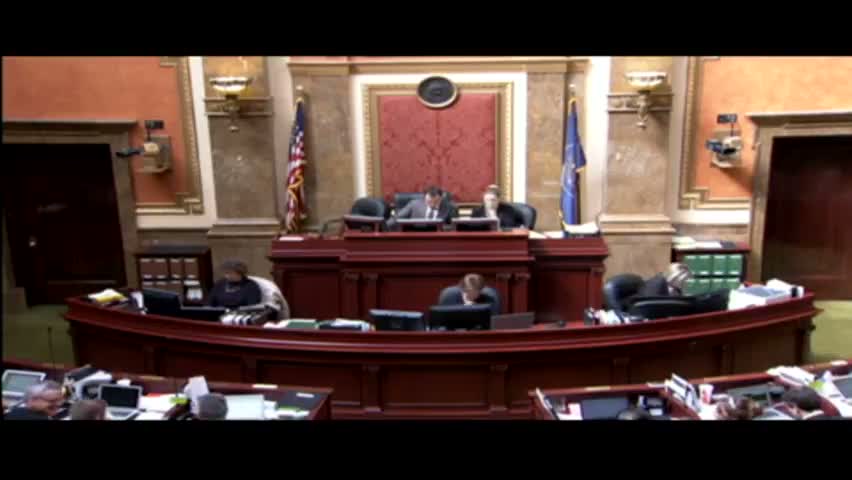
The Utah House of Representatives passed third‑substitute HB 4 46 on March 5, 2015 by a vote of 56 to 18, moving the measure to the Senate for consideration. The bill, discussed on the floor as a state plan informally called "Utah Cares," would extend primary‑care‑network (PCN) coverage and, in the sponsor's third substitute, allow psychiatrists and psychiatric advanced‑practice nurse practitioners to be treated as primary‑care providers under PCN so patients can retain outpatient mental‑health treatment as they gain employment.
The bill's sponsor, Representative Dunigan, told the House the proposal is designed to fill the "coverage gap"—adults who currently lack access to Medicaid or subsidized coverage—and said the third substitute preserves fiscal controls built into the bill: "The main thing is it does not change the fiscal note in the first year," he said, adding that the mechanism ties enrollment to appropriations so the Legislature can adjust eligibility thresholds if costs rise. Dunigan and other proponents framed the change as a measured, refundable approach that keeps the primary‑care network structure while expanding access to needed behavioral‑health services.
Opponents questioned both process and long‑term cost. Representative Anderegg and others said the House was circumventing committee review and urged colleagues to respect the committee process. Representative Paulson, who chairs a health reform task force, said the bill had not been properly vetted with stakeholders and cited fiscal comparisons that showed higher costs and narrower coverage than alternative plans: "If you look at the numbers, this covers less than half the people for more than twice the cost," he said, referencing floor estimates comparing the bill to other proposals discussed in the session.
A proposed fourth substitute that backers described as closer to a broader "Healthy Utah" model was moved on the floor but failed 22‑52. After further debate, the House voted to adopt the third substitute and approved the bill for transmittal to the Senate.
Sponsor and supporters emphasized mental‑health continuity as a central benefit. Representative Red (floor sponsor of the substitute) said allowing psychiatrists and psychiatric nurse practitioners to be counted under PCN would let people "get a job and still be able to get some health care through their psychiatrist or psychiatric nurse practitioner," an outcome proponents said helps patients stabilize and rejoin the workforce. Supporters also noted that federal approvals (Centers for Medicare & Medicaid Services) would be required for some program changes and that the bill's implementation would be subject to appropriation.
The bill's passage did not resolve outstanding fiscal questions raised by several members who asked for clearer multi‑year projections. Sponsors repeatedly said first‑year fiscal impacts would not change and that the statutory appropriation process built into the bill gives the Legislature tools to limit costs.
The House record shows the third substitute passed 56 yes to 18 no and will be transmitted to the Senate. Earlier on the floor the House failed to adopt a broader fourth substitute by a vote of 22 yes to 52 no.
Next steps: HB 4 46 is scheduled to be transmitted to the Senate for its consideration; implementation would require any necessary federal approvals and follow‑up appropriations by the Legislature.