Get Full Government Meeting Transcripts, Videos, & Alerts Forever!
Get email alerts on the Public Safety topic
No spam. Unsubscribe anytime.
House approves changes to 'dangerous weapon' definition, narrows ban so some restricted individuals may hunt with archery equipment
Summary
Second substitute House Bill 268 clarifies the definition of 'dangerous weapon' and creates a narrow exemption allowing some restricted individuals to hunt with archery equipment while preserving courts' and parole boards' ability to restrict possession; passed the House 60–11.
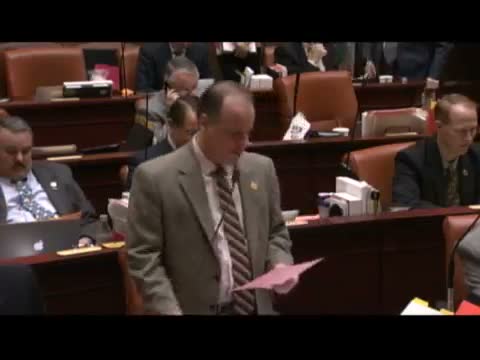
The Utah House passed Second Substitute House Bill 268 on March 4, a measure the sponsor said narrows ambiguity in the state's definition of "dangerous weapon" and creates a limited exemption allowing otherwise‑restricted individuals to hunt using archery equipment. Representative Green, sponsor of the bill, said the changes respond to variation in enforcement and interpretation and align Utah with neighboring states that allow similar exemptions.
"What we're trying to accomplish here is to determine what constitutes a dangerous weapon, what doesn't, and to keep those things that are truly dangerous out of the hands of people who could do harm with them," Representative Green said, noting prosecutors and the Commission on Criminal and Juvenile Justice (CCJJ) were involved in drafting clearer factors for courts and officers to assess.
A narrow exemption in the bill would permit certain restricted individuals to use archery equipment for lawful hunting; the bill adds language (lines 275–278) allowing courts or the Board of Pardons and Parole to continue to restrict possession as a condition of probation or parole. During floor debate some members raised safety concerns about the power of modern compound bows and whether prosecutors and CCJJ had finalized support; Representative King said he was unsure of the organizations' current stance and sought clarification. The sponsor said he had attempted to confirm positions and that committee discussions produced compromises.
Representative Green argued the bill balances public safety and recreation, while opponents urged caution. On final passage the House recorded 60 yes votes and 11 no votes; the bill will be transmitted to the Senate.
Why it matters: The measure clarifies enforcement standards for ‘‘dangerous weapon’’ and narrowly expands hunting access for some restricted individuals; it preserves judicial and parole discretion to impose limits.
What’s next: HB268 moves to the Senate for further consideration.