Get Full Government Meeting Transcripts, Videos, & Alerts Forever!
Get email alerts on the Tax Policy topic
No spam. Unsubscribe anytime.
House approves state earned-income tax credit tied to federal EITC trigger
Summary
The House passed House Bill 218 to create a state-level earned-income tax credit linked to the federal EITC and a Marketplace Fairness trigger. Supporters called it an anti-poverty tool; opponents questioned fiscal tradeoffs. Final vote: 38–25.
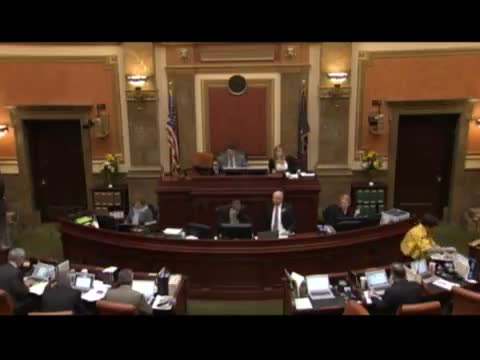
The Utah House on Feb. 20 approved House Bill 218 to create a state earned-income tax credit (EITC) enacted as an addition to the federal credit and structured to trigger only after certain marketplace-fairness tax changes generate revenue.
Representative Hutchings, sponsor of the bill, said the state credit would be pegged to five percent of the federal EITC and estimated the typical benefit would be "probably just a little less than a hundred dollars per family." Hutchings and supporters framed the measure as a targeted, employment-linked anti-poverty program that helps working families while relying on a revenue trigger so the credit would not increase spending unless the state receives corresponding receipts.
Critics on the floor, including Representative Green, questioned whether small per-family amounts would materially reduce poverty and noted the bill’s $25 million fiscal note; supporters replied that the credit complements other anti-poverty tools and is designed to reach working families most in need.
The clerk reported final passage with 38 ayes and 25 nays. The bill will be transmitted to the Senate for further consideration.
Sponsors emphasized the bill’s design to incentivize work (eligibility requires qualifying for the federal EITC) and said most recipients would be small-dollar beneficiaries aimed at supplementing low household incomes. Fiscal details and the precise trigger mechanism were discussed on the floor, and members asked staffers to review the bill’s transfer language and fiscal-effects schedule.