Get Full Government Meeting Transcripts, Videos, & Alerts Forever!
Get email alerts on the Air Quality Enforcement topic
No spam. Unsubscribe anytime.
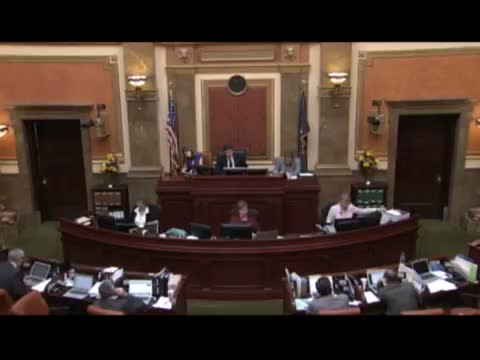
House approves tougher penalties for deliberate diesel smoke emissions after floor debate
Summary
House passed a first substitute to HB 271 to strengthen enforcement against vehicles emitting visible diesel smoke (targeting deliberate 'chipping'); sponsor described a 20% darkness threshold over five seconds and a second-offense elevation to a class B misdemeanor. The measure passed 45-27 following extended floor debate.
The House approved a substituted version of House Bill 271 aimed at reducing deliberate diesel smoke emissions by strengthening enforcement and penalties for repeated offenses.
Representative Perry, sponsor of the substitute, said the existing law treats emission tampering as a Class C misdemeanor and that the substitute would make a repeat offense a Class B misdemeanor. He said the bill clarifies enforcement metrics by defining an observable "shade or density" (a 20 percent darkness threshold) sustained for more than five seconds and removes the technical "opacity" wording to make enforcement more practicable. Perry said exemptions for vehicles under load and large commercial vehicles were included.
Floor members raised concerns about rural drivers with older vehicles, farmers and drivers who rely on older equipment; representatives asked whether the bill would unfairly penalize low-income drivers and whether enforcement variability (wind, lighting) could make it difficult to apply the standard. Sponsors replied the enforcement focus is on deliberate modifications ("chipping") and extreme visible emissions, not routine agricultural or load-related smoke, and that officers would likely document violations (e.g., videotape) for evidence.
After extended debate the House approved the first substitute by a vote of 45 yeas to 27 nays and will transmit the measure to the Senate. Supporters framed the bill as protecting air quality and safety for pedestrians and cyclists; opponents warned of enforcement burdens and unintended effects on rural residents.