Get Full Government Meeting Transcripts, Videos, & Alerts Forever!
Get email alerts on the Electric Vehicles topic
No spam. Unsubscribe anytime.
Utah House clears bill to ease rules for electric-vehicle charging stations
Summary
The House unanimously passed House Bill 19 to clarify when private operators can charge for electric-vehicle (EV) charging without being regulated as public utilities, aiming to expand charging infrastructure and reduce range barriers for EV drivers.
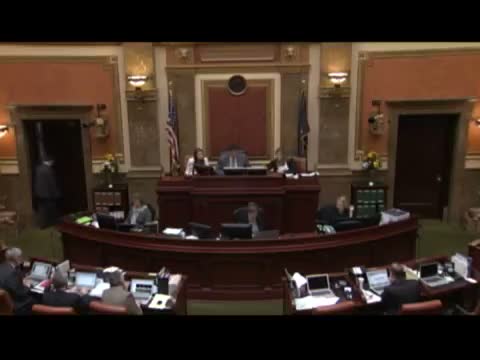
The Utah House on Feb. 20 passed House Bill 19, a measure sponsors said will help expand electric-vehicle charging infrastructure by clarifying when private operators may assess fees without being defined as public utilities. Representative Arent, the bill sponsor, told colleagues the measure was a product of interim committee work and the economic-development task force and that it would allow more rapid chargers to be installed by private companies.
"Some of those companies that wanna put those charging stations in want to be able to assess a small fee to those who are plugging in their vehicle," Representative Arent said while explaining that defining such sellers as utilities could overregulate the emerging market. Supporters said the bill clears a legal uncertainty that has constrained investment and that it enjoyed wide stakeholder backing, listing groups from Rocky Mountain to the Salt Lake Chamber of Commerce among endorsers.
Lawmakers who spoke in favor described the bill as noncontroversial and business-friendly. Representative Lifford disclosed a personal conflict—saying he owns an electric vehicle—and urged support. Representative Greene, who said he was motivated by the sponsor’s deregulatory argument, announced he signed on as a cosponsor.
Voting was unanimous on final passage: the clerk announced the tally at 64 ayes, 0 nays. The bill will be transmitted to the Senate for further consideration.
The House record shows the measure came to the floor after unanimous interim committee approval, and sponsors emphasized the bill’s environmental frame — that broader charging networks support cleaner transportation. No formal amendments or roll-call objections were recorded on final passage.
Next steps: HB 19 is headed to the Senate for its consideration and potential further amendment.