Get Full Government Meeting Transcripts, Videos, & Alerts Forever!
Get email alerts on the Votes Roundup topic
No spam. Unsubscribe anytime.
Votes at a glance: Key House actions on Feb. 24, 2014
Summary
On Feb. 24 the Utah House passed multiple bills (HB 211, HB 254, HB 314, HB 334, HB 127, HB 38, HB 262, HB 101) and circled several others for clarification; this roundup lists outcomes and short descriptions.
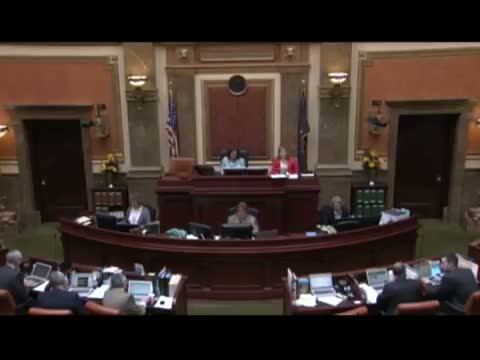
The Utah House floor on Feb. 24, 2014, considered a lengthy third‑reading calendar and took final action on several bills. Below are the principal official outcomes and brief descriptions of each item recorded in the transcript.
• First substitute HB 211 — Substance abuse recovery residences: Passed the House, 72–0. The bill defines recovery residences, encourages coordination with the Division of Substance Abuse and Mental Health and creates a temporary advisory committee.
• Substitute HB 254 — Human trafficking victim amendments: Passed the House, 73–0. The bill moves many first‑time child commercial sexual‑exploitation cases into dependency services, adds civil remedies for victims and was supported in committee by multiple agencies and advocacy groups.
• HB 314 — Vehicle immobilization fee amendments (booting/impound): Passed the House, 72–0. The bill prohibits charging a booting fee concurrently with towing and impound fees for the same period.
• HB 334 — Bail bond apprentice identification: Passed the House (final announced tally 71 yes, 1 no). The bill allows bail bond recovery apprentices to wear identifying clothing for safety.
• HB 127 — Consumer lending amendments (payday lending): Passed the House, 69–4. The measure offers a 60‑day, no‑interest repayment option after a 10‑week maximum roll, adds minimum underwriting checks and requires additional reporting to regulators.
• Second substitute HB 38 — Resource stewardship amendments (state coordinator for air-quality/resource stewardship): Passed the House, 61–11 (after amendment limiting language to "improve air quality"). The bill creates a resource stewardship coordinator to share best practices across state agencies.
• Second substitute HB 262 — Local governing body voting amendments: Passed the House, 72–1. The bill clarifies that a majority of the entire council is required to take action, with exceptions when vacancies prevent a majority.
• HB 101 — Roadway and sidewalk safety amendments: Passed the House, 51–22. The bill narrows where pedestrian activities are allowed on shoulders and prohibits certain aggressive panhandling behaviors in defined areas, while allowing a permit process for planned events.
Circled or otherwise set aside for clarification:
• HB 86 — Utah Energy Infrastructure Authority Act amendments: The sponsor agreed to "circle" the bill to clarify whether bonds would carry state backing and to answer technical questions about risk assessment; the motion to circle passed.
• First substitute HB 49 — Water rights change application amendments: The bill was circled following a motion to circle.
For all bills that passed the House, the transcript records transmittal to the Senate for further consideration. Where the transcript records a motion to circle or a need for drafting clarification, the House postponed final action pending sponsor follow-up.