Get Full Government Meeting Transcripts, Videos, & Alerts Forever!
Get email alerts on the Energy Infrastructure topic
No spam. Unsubscribe anytime.
House approves measure to reactivate Utah Energy Infrastructure Authority; sponsor says bonds are not state-backed
Summary
The House uncircled and passed House Bill 86 to enable the Utah Energy Infrastructure Authority to help small municipalities issue and manage authority bonds; sponsor said the bonds are not general-obligation and do not place the state on the hook. Vote: 67-2.
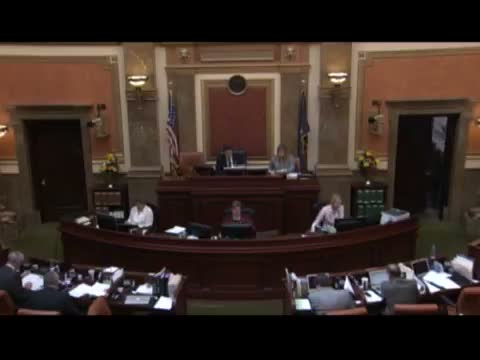
The Utah House on the floor uncircled and passed House Bill 86, a measure to facilitate use of the Utah Energy Infrastructure Authority to help smaller municipalities finance energy delivery projects, after a floor explanation from the sponsor, Representative Barris.
Representative Barris told colleagues the authority issues "authority bonds" and emphasized that "they are not general obligation bonds" and "are not backed by the state of Utah," citing the statute establishing the authority in section 63H. He said the authority can lend public-finance expertise, purchase and manage community development agency (CDA) bonds, and issue its own bonds to finance energy-delivery systems for municipalities that lack internal capacity to structure such deals.
Representative Sagers asked whether a default by the authority could affect the state's credit rating or embroil the state in litigation. Barris replied—when yielding to questions—that the authority is a governor's board, not a state agency, and that the statute makes clear the state would not be liable for authority bond obligations. "Those who would be purchasing those bonds understand the risk and that it is disclosed to them at the time of the purchase," he said.
After floor discussion and a summation by Barris highlighting the authority's potential to assist communities with economic development and energy projects, the House voted. House Bill 86 passed 67 yeas to 2 nays and will be transmitted to the Senate for consideration.
The bill now awaits Senate action; sponsors said financing documents and bond disclosures will explain to buyers that payments are limited to pledged authority revenues and not general-state tax or credit resources.