Get Full Government Meeting Transcripts, Videos, & Alerts Forever!
Get email alerts on the Substance Abuse Recovery topic
No spam. Unsubscribe anytime.
House approves bill to define and regulate recovery residences, creates advisory committee
Summary
First substitute HB 211, which defines 'recovery residence,' establishes qualifications and encourages coordination with the Division of Substance Abuse and Mental Health and creates a temporary advisory committee, passed the House 72–0 and will move to the Senate.
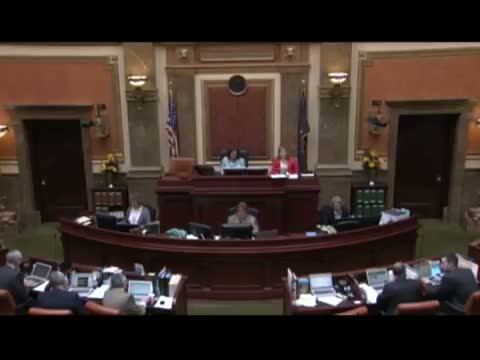
The Utah House passed first substitute HB 211 on Feb. 24, 2014, by a vote of 72–0. Representative Kennedy described the bill as "a compromise bill, a consensus bill" intended to define recovery residences, distinguish them from residential treatment, and provide a framework for state coordination and oversight.
Kennedy said the bill sets out a mid‑level provider category for substance-abuse recovery housing, identifies qualifications for facilities, and encourages the Division of Substance Abuse and Mental Health to coordinate with providers to ensure best practices. He also highlighted the formation of a committee (with a sunset provision for the committee) to advise on long-term regulation and the placement of these facilities in communities.
In questions from other members, Representative Fisher asked whether recovery residences would be a permitted use under municipal zoning ordinances or instead could appear in any residential area. Kennedy explained that federal Fair Housing Act protections treat addiction as a disability and that those in recovery have the right to live in any neighborhood; he said the bill does not create zoning restrictions that would conflict with federal law. Members also asked whether proximity restrictions to schools or day-care centers exist; the sponsor said there are no such federal restrictions and the bill does not add them.
Kennedy described the bill as a modest step to define the institutions and provide a basis for future regulation. With no further debate, submission was waived and the House voted to pass the bill 72–0. The measure will be transmitted to the Senate for consideration.