Get Full Government Meeting Transcripts, Videos, & Alerts Forever!
Get email alerts on the Public Safety Panhandling topic
No spam. Unsubscribe anytime.
Utah House passes roadway safety bill limiting aggressive panhandling on shoulders
Summary
The House approved HB 101 on Feb. 24, 2014, a time, place and manner restriction that prohibits certain pedestrian activities on road shoulders and near bank entrances/ATMs, citing public-safety concerns; supporters called it a measured effort and opponents warned of First Amendment implications.
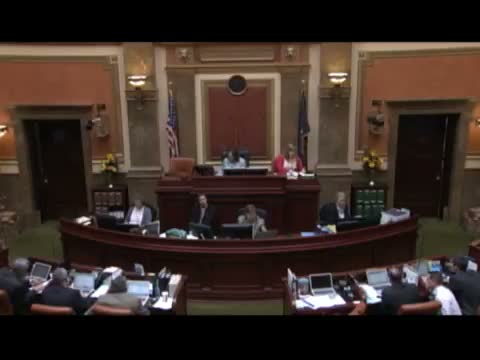
The Utah House of Representatives voted 51–22 on Feb. 24 to pass HB 101, a bill that narrows where and how pedestrians may engage in activities near roadways and specifically limits aggressive panhandling in defined high-risk zones.
Sponsor Representative John Nielsen framed the measure as a public-safety response to unsafe pedestrian behavior near moving traffic, saying the bill is a "time, manner, place restriction" designed to follow court parameters and protect drivers and pedestrians. He told the House the bill addresses situations that have led to near-accidents and injuries and that it "specifically prohibits pedestrian activities in a place not designed for pedestrians." Representative Nielsen said the legislation applies to busy state and numbered highways and entrances to freeways and includes a permitting process for planned events.
Opponents raised free-speech concerns. Representative Lifars said the bill "does restrict the ability to [campaign] for people such as myself" and called the measure a "direct imposition on freedom of speech." Representative King pressed the sponsor on whether conduct already covered by existing laws (for example, jaywalking or obstructing traffic) would be redundant under this bill. Representative King also asked whether the bill could make an otherwise stationary sign-holder on a roadside shoulder illegal if drivers slowed to read the sign; the sponsor responded that conduct that slows or imperils traffic could be treated as impeding traffic under the statute.
The bill includes a limited exemption process: a state, county or municipality may grant a temporary written exemption at a specified location and time for planned demonstrations, fundraisers or political "honk-and-wave" events, provided public safety can be assured. The sponsor noted that ordinary activities on a sidewalk or park strip above a curb remain permissible and that the bill is focused on shoulders and other areas designed for vehicles, not pedestrians.
Supporters — including downtown business groups, chambers of commerce and some police officials cited in committee materials — said downtown retailers and motorists are harmed by people standing near traffic lanes. Representative Menlove described observing panhandlers in harm’s way on freeway shoulders and urged the House to adopt measures that reduce traffic hazards.
The House adopted the sponsor’s amendment to clarify permit language and passed HB 101 51–22. The bill now goes to the Senate for further consideration.