Get Full Government Meeting Transcripts, Videos, & Alerts Forever!
Get email alerts on the Energy Transmission topic
No spam. Unsubscribe anytime.
Utah House approves bill giving state role in assessing in‑state need for merchant transmission lines
Summary
The Utah House passed second substitute House Bill 44, establishing a process for the Office of Energy Development to evaluate in-state need for merchant interstate transmission projects and requiring county conditional‑use review; final vote 50–22.
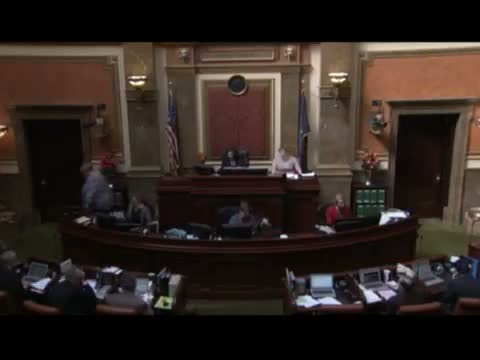
The Utah House on Feb. 21 passed second substitute House Bill 44, a measure that creates a state-level process to evaluate “in‑state need” for proposed interstate merchant transmission lines and to connect that certification with county conditional-use permitting. The bill passed the House on a 50–22 vote and will be transmitted to the Senate for further consideration.
Sponsor Representative Handy said the measure is intended to protect Utah’s long-term economic interests and to ensure the state and local governments can evaluate whether merchant developers will provide access and benefit to in-state power generators. "We need to look out for Utah's long term economic needs regarding power," Handy said, describing corridors as limited and essential to future growth.
The substitute removes an earlier 25 percent capacity-reservation provision that had generated concern, but retained a requirement that merchant developers demonstrate they can meet present and prospective in-state needs either through builds or future upgrades. The Office of Energy Development will be responsible for reviewing developers’ filings and issuing a certificate of in‑state need when appropriate; that certificate then allows counties to consider conditional-use permits.
Opponents warned of possible constitutional and market consequences. Representative Ifrey and others asked whether reserving capacity could amount to an uncompensated taking of private investment or change the expectations of private capital. Sponsors countered that any reserved state capacity would not be free: the state or in‑state users would pay for access, and the bill had been drafted in consultation with stakeholders, the governor’s office and the Office of Energy Development.
Several members questioned regulatory boundaries, noting that merchant lines that do not yet deliver power in Utah are not regulated by the Utah Public Service Commission and that Federal Energy Regulatory Commission rules will intersect with state review. Supporters argued the bill is modest and proactive, intended to safeguard future access and economic development for Utah generators and counties while allowing merchant developers to build to market demand.
A motion for a previous question closed debate; the second substitute passed 50 yes, 22 no. The House will send the bill to the Senate, where further amendment is possible.