Get Full Government Meeting Transcripts, Videos, & Alerts Forever!
Get email alerts on the Legislative Proceedings topic
No spam. Unsubscribe anytime.
Votes at a glance: consent and quick-passage items in Utah House (Feb. 13–14, 2014)
Summary
The House approved multiple consent and quickly considered bills on Feb. 13–14, including HB 76 (insurance revisions) 73–0, HB 316 (financial institutions fee amendments) 74–0, HB 327 (veterans employment) 72–0, HB 280 (pawn shop revisions) 75–0, and others read and referred to committees.
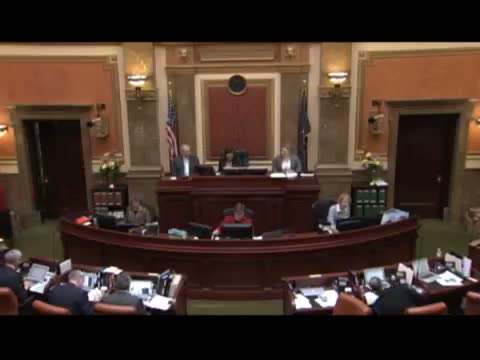
The Utah House on Feb. 13–14 handled a range of consent calendar and committee‑reported items that received brief floor presentations and unanimous or near‑unanimous votes.
Key outcomes on the consent calendar and short presentations:
- HB 76 (insurance related revisions): presented by Representative Byrd; passed 73–0 and transmitted to the Senate. Representative Byrd said the bill adjusts a reimbursement figure to $25 for agents.
- HB 316 (financial institutions fee amendments): presented by Representative Dunnegan; passed 74–0 and transmitted to the Senate. Sponsor said the Department of Financial Institutions collected more fees than needed and the bill lowers fees to prior levels.
- HB 327 (veterans employment opportunity amendments): presented by Representative Ray; passed 72–0 and transmitted to the Senate. The bill allows on-the-job examinations or interviews for veterans with disabilities when applying for civil-service positions.
- HB 280 (technical revisions to pawn shop statute): presented by Representative Romero; passed 75–0 and transmitted to the Senate. The bill corrects a cross-reference regarding disposition of property removed from law enforcement hold.
Several other bills were read for the second time and placed on third reading calendars, and multiple committee reports were adopted by voice vote. A number of bills were signed by the Senate and transmitted for the Speaker’s signature.